Hydrochloric Acid → 4-Isopropylacetophenone
Reaction equation

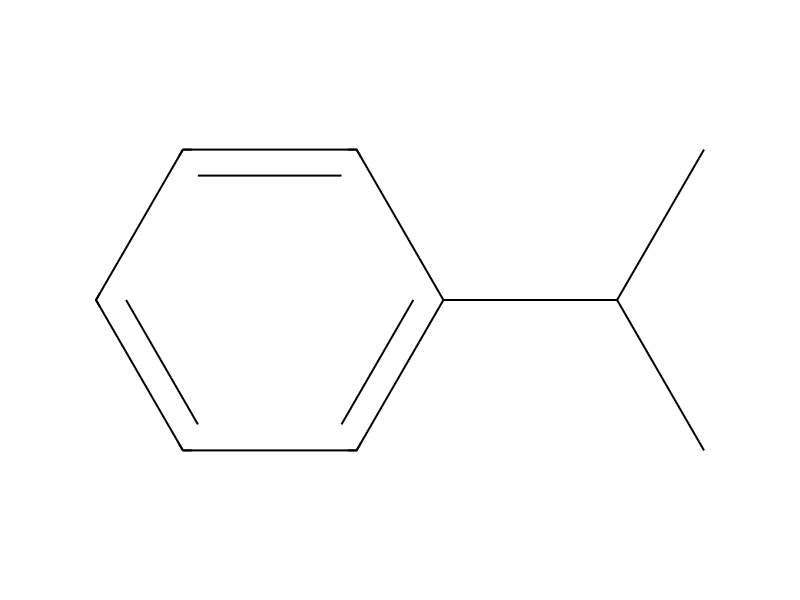
[CH:1]([C:4]1[CH:9]=[CH:8][CH:7]=[CH:6][CH:5]=1)([CH3:3])[CH3:2].[Cl-].[Al+3].[Cl-].[Cl-].[C:14](Cl)(=[O:16])[CH3:15].Cl>C(=S)=S>[CH3:2][CH:1]([C:4]1[CH:9]=[CH:8][C:7]([C:14]([CH3:15])=[O:16])=[CH:6][CH:5]=1)[CH3:3]Participants
6
Reactant 4



Product 1

Reagents, catalysts & solvents 1

Conditions
- Temperature
- 0 °C
Procedure
A solution of isopropylbenzene (50 g) in carbon disulfide (250 mL) is treated with aluminum chloride (170 g), and the resulting mixture is cooled to 0° C. Acetyl chloride (33 g) is added at the rate of 1 mL/min, and the resulting mixture is stirred overnight. The mixture is poured into aq. HCl (2N, 400 mL), and the layers are separated. The aqueous phase is extracted with ethyl acetate, and the organic phases are combined, washed with brine, dried over Na2SO4, filtered and concentrated to afford the product, 4-isopropylacetophenone, as an oil (66 g).
Workup
- customthe layers are separated
- extractionThe aqueous phase is extracted with ethyl acetate
- washwashed with brine
- dry with materialdried over Na2SO4
- filtrationfiltered
- concentrationconcentrated
Sources & evidence
- ORD record
- ord-22958c63ba3442e680271778cf6481e1
- Source dataset
- uspto-grants-2015_06
- Patent number
- US09051342B2
Reaction notes
Loading…