Pyridine → quinolin-6-yl acetate
Reaction equation

[N:1]1[C:10]2[C:5](=[CH:6][C:7]([OH:11])=[CH:8][CH:9]=2)[CH:4]=[CH:3][CH:2]=1.N1C=CC=CC=1.[C:18](Cl)(=[O:20])[CH3:19]>C(Cl)Cl>[C:18]([O:11][C:7]1[CH:6]=[C:5]2[C:10](=[CH:9][CH:8]=1)[N:1]=[CH:2][CH:3]=[CH:4]2)(=[O:20])[CH3:19]Participants
5
Reactant 3


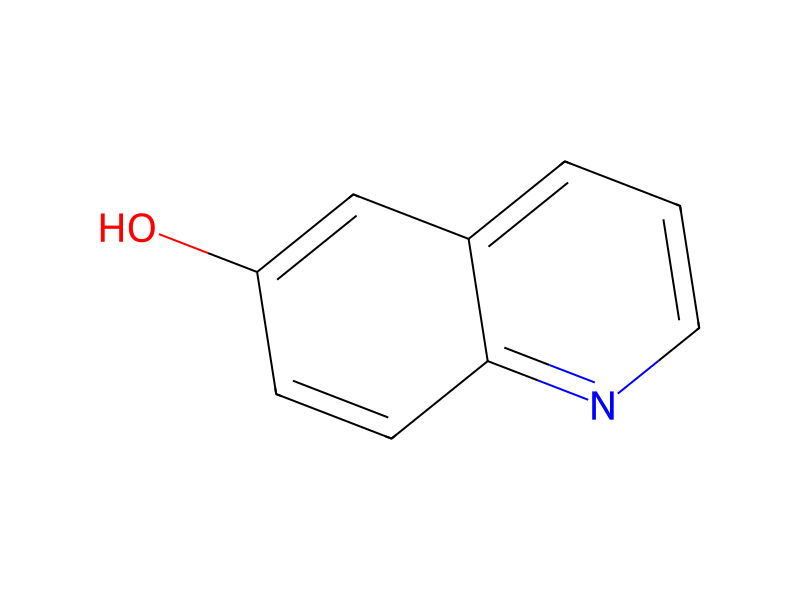
Product 1

Reagents, catalysts & solvents 1

Procedure
To a solution of quinolin-6-ol (4.5 g, 31.0 mmol) and pyridine (3.01 ml, 37.2 mmol) in DCM (50 ml) was added acetyl chloride (2.65 ml, 37.2 mmol) at 0° C. The mixture was then stirred at rt for 8 h. The reaction was quenched with saturated NaHCO3 and the mixture was extracted with DCM (30 ml) three times. The combined organic phase was washed with brine and dried over anhydrous MgSO4, filtered and concentrated to give the title compound (5.0 g, 68.9% yield), which was used directly in next step. LCMS (method B): [M+H]+=188, tR=1.64 min.
Workup
- customThe reaction was quenched with saturated NaHCO3
- extractionthe mixture was extracted with DCM (30 ml) three times
- washThe combined organic phase was washed with brine
- dry with materialdried over anhydrous MgSO4
- filtrationfiltered
- concentrationconcentrated
Sources & evidence
- ORD record
- ord-e636d6c9dcac4c61bc13a58f14ad8aec
- Source dataset
- uspto-grants-2015_06
- Patent number
- US09062045B2
Reaction notes
Loading…