Pyridine → 3-Bromobenzyl 4-nitrophenyl carbonate
Reaction equation

[Br:1][C:2]1[CH:3]=[C:4]([CH2:8][OH:9])[CH:5]=[CH:6][CH:7]=1.N1C=CC=CC=1.[C:16](Cl)(=[O:27])[O:17][C:18]1[CH:23]=[CH:22][C:21]([N+:24]([O-:26])=[O:25])=[CH:20][CH:19]=1>C(Cl)Cl>[C:16](=[O:27])([O:17][C:18]1[CH:19]=[CH:20][C:21]([N+:24]([O-:26])=[O:25])=[CH:22][CH:23]=1)[O:9][CH2:8][C:4]1[CH:5]=[CH:6][CH:7]=[C:2]([Br:1])[CH:3]=1Participants
5
Reactant 3

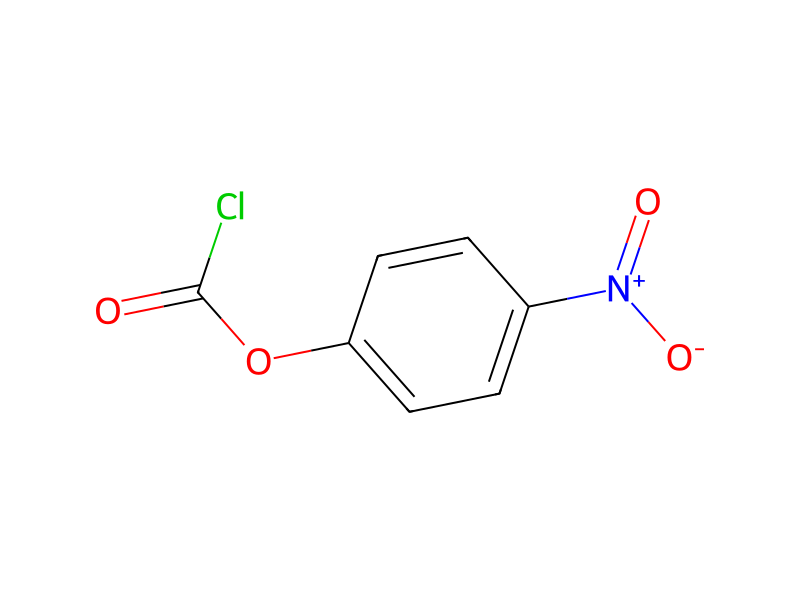
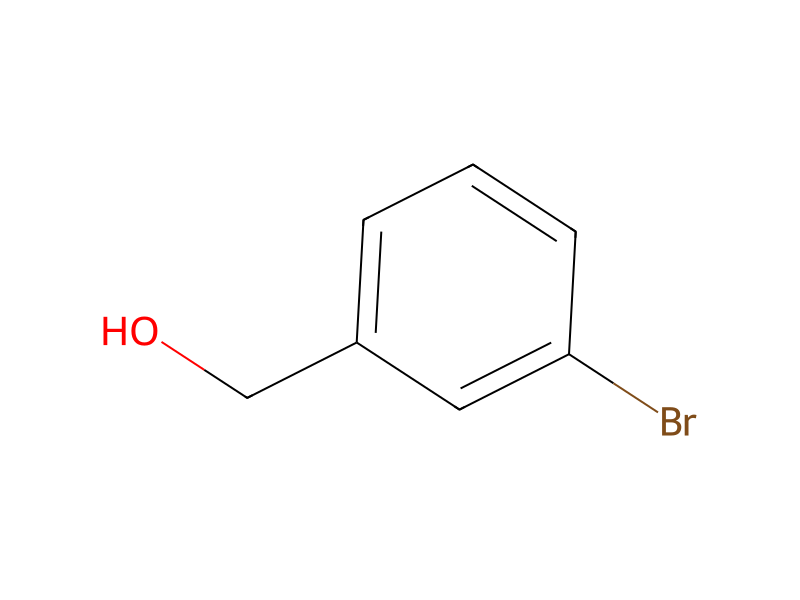
Product 1

Reagents, catalysts & solvents 1

Conditions
- Temperature
- 0 °C
Procedure
To a solution of (3-bromophenyl)methanol (10 g, 53.5 mmol) and pyridine (8.65 mL, 107 mmol) in DCM (80 mL) at 0° C. was added a solution of 4-nitrophenyl carbonochloridate (12.93 g, 64.2 mmol) in DCM (20 mL) dropwise. Upon the completion of addition, the reaction mixture was stirred at 0° C. for 2 h. After this time, the reaction was quenched with water. The organic layer was separated and washed with water, brine, dried over anhydrous MgSO4, filtered, and concentrated to afford the title compound (19.5 g, 100%). 1H NMR (400 MHz, CDCl3) δ 8.31-8.29 (m, 1H), 8.28-8.25 (m, 1H), 7.61 (t, J=1.6 Hz, 1H), 7.53 (d, J=8.2 Hz, 1H), 7.42-7.34 (m, 3H), 7.30 (d, J=7.8 Hz, 1H), 5.26 (s, 2H).
Workup
- additionUpon the completion of addition
- customAfter this time, the reaction was quenched with water
- customThe organic layer was separated
- washwashed with water, brine
- dry with materialdried over anhydrous MgSO4
- filtrationfiltered
- concentrationconcentrated
Sources & evidence
- ORD record
- ord-f0ee7d77f59d433b8edf8dd4675c2d12
- Source dataset
- uspto-grants-2015_06
- Patent number
- US09062028B2
Reaction notes
Loading…