Guanidine Hydrochloride → Methyl 2-amino-6,7-dihydro-5H-cyclopenta[d]pyrimidine-6-carboxylate
Reaction equation

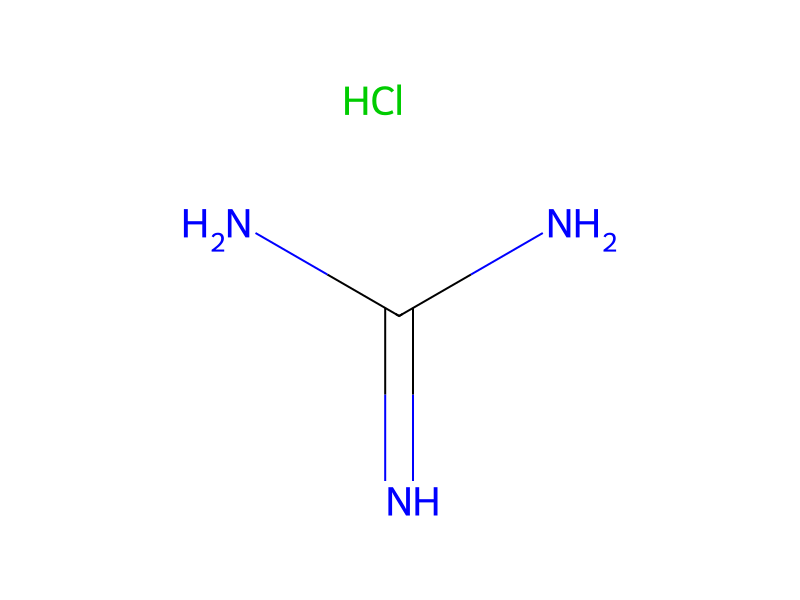
CN([CH:4]=[C:5]1[C:9](=O)[CH2:8][CH:7]([C:11]([O:13][CH3:14])=[O:12])[CH2:6]1)C.Cl.[NH2:16][C:17]([NH2:19])=[NH:18].C[O-].[Na+]>CO>[NH2:18][C:17]1[N:19]=[CH:4][C:5]2[CH2:6][CH:7]([C:11]([O:13][CH3:14])=[O:12])[CH2:8][C:9]=2[N:16]=1Participants
5




Conditions
- Temperature
- 90 °C
Procedure
To a solution of methyl 3-[(dimethylamino)methylidene]-4-oxocyclopentanecarboxylate (71.7 mg, 0.36 mmol) in anhydrous methanol (2.5 mL) was added guanidine hydrochloride (124.7 mg, 1.3 mmol) followed by sodium methoxide in methanol (0.24 mL, 1.27 mmol). The mixture was heated to 90° C. in a sealed tube overnight. The crude reaction was quenched with 2 N HCl and concentrated in vacuo. The aqueous residue was purified by HPLC (30×100 mm Waters Sunfire column; 5 micron; 35 mL/min.; 210 nM; 0% to 40% CH3CN+0.05% TFA/water+0.05% TFA over 15 min.; the compound eluted at 10% CH3CN+0.05% TFA/water+0.05% TFA) to afford the title compound after lyophilization.
Workup
- customThe crude reaction
- customwas quenched with 2 N HCl
- concentrationconcentrated in vacuo
- customThe aqueous residue was purified by HPLC (30×100 mm Waters Sunfire column
- washthe compound eluted at 10% CH3CN+0.05% TFA/water+0.05% TFA)
Sources & evidence
- ORD record
- ord-dee21f97baec43fe97cf9bd7ab342a77
- Source dataset
- uspto-grants-2015_06
- Patent number
- US09062070B2
Reaction notes
Loading…