Lithium hydroxide, monohydrate → HCID 131732992, compound
Reaction equation

ClC(Cl)(Cl)C[O:4][C:5]([C@@H:7]1[CH2:12][CH2:11][CH2:10][N:9]([C:13](=[O:24])[C@@H:14]([NH:16][C:17]([O:19][C:20]([CH3:23])([CH3:22])[CH3:21])=[O:18])[CH3:15])[NH:8]1)=[O:6].O.[OH-].[Li+]>O1CCCC1.O>[C:20]([O:19][C:17]([NH:16][C@@H:14]([CH3:15])[C:13]([N:9]1[CH2:10][CH2:11][CH2:12][C@@H:7]([C:5]([OH:6])=[O:4])[NH:8]1)=[O:24])=[O:18])([CH3:23])([CH3:21])[CH3:22]Participants
Reactant 2


Product 1

Reagents, catalysts & solvents 1
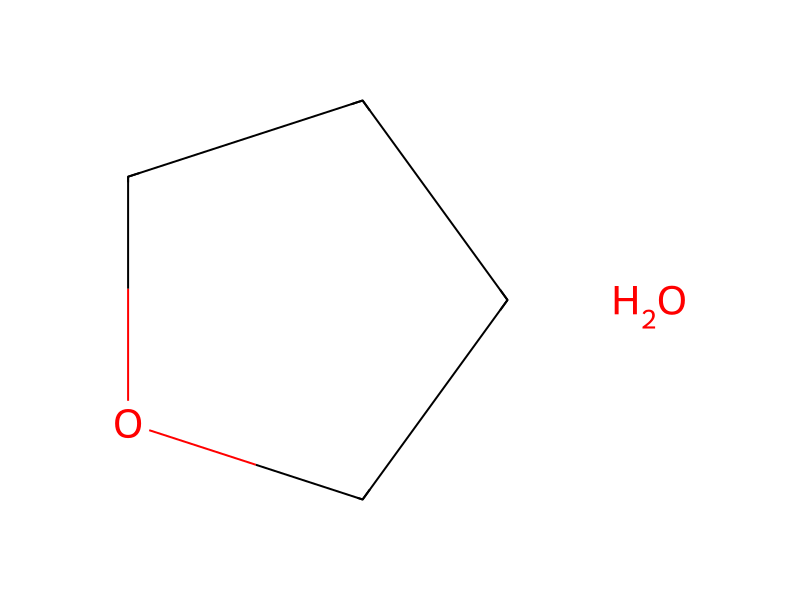
Conditions
- Temperature
- 0 °C
Procedure
A cooled (0° C.) solution of (S)-1-((S)-2-tert-butoxycarbonylamino-propionyl)-hexahydro-pyridazine-3-carboxylic acid 2,2,2-trichloro-ethyl ester (3.007 g, 6.948 mmol) in tetrahydrofuran/water (60 mL, 5:1) was treated with lithium hydroxide monohydrate (874.4 mg, 20.844 mmol). After stirring at 0° C. for 40 minutes the reaction was quenched with hydrochloric acid (1 M, 50 mL). The aqueous layer was extracted with ethyl acetate (2×). The organics were combined, dried over anhydrous sodium sulfate, filtered and the volatiles were removed in vacuo. Residual trichlorethanol was azeotroped off with toluene (3×) to provide (S)-1-((S)-2-tert-butoxycarbonylamino-propionyl)-hexahydro-pyridazine-3-carboxylic acid as a white solid which was then combined with (R)-1-(7-bromo-quinolin-2-yl)-ethylamine hydrochloride (1.998 g, 6.948 mmol) and suspended in anhydrous acetonitrile (60 mL) and tetrahydrofuran (10 mL). The suspension was cooled to 0° C. and subsequently treated with N,N-diisopropylethylamine (6 mL, 34.740 mmol) and 1-[bis(dimethylamino)methylene]-1H-1,2,3-triazolo[4,5-b]pyridinium 3-oxide hexafluorophosphate (3.699 g, 9.727 mmol). After slowly warming to room temperature and stirring for 16 h, the reaction was quenched at 0° C. with hydrochloric acid (1 M, 70 mL). The aqueous layer was extracted with ethyl acetate (2×). The organics were combined, washed with a saturated solution of sodium bicarbonate, dried over anhydrous sodium sulfate, filtered and the volatiles were removed in vacuo. The residue was purified by silica gel chromatography using a 100 g Isolute cartridge eluted with a continuous gradient of iso-hexanes/ethyl acetate 1:0 to 1:4 to afford the title compound (3.702 g, 99%) as a white foam. 1H NMR (300 MHz, CDCl3) δ 1.38 (d, J=6.9 Hz, 3H), 1.43 (s, 9H), 1.47-1.55 (m, 2H), 1.58 (d, J=6.9 Hz, 3H), 1.60-1.78 (m, 2H), 2.22-2.31 (m, 1H), 2.65-2.78 (m, 1H), 3.39-3.52 (m, 1H), 4.55 (d, J=13.4 Hz, 1H), 5.18-5.34 (m, 2H), 5.36-5.45 (m, 1H), 7.37 (d, J=8.5 Hz, 1H), 7.65 (dd, J=8.5, 1.6 Hz, 1H), 7.70 (d, J=8.5 Hz, 1H), 8.04 (d, J=6.5 Hz, 1H), 8.14 (d, J=8.5 Hz, 1H), 8.36 (s, 1H). LCMS (m/z) 536.1, 537.1 [M+H], Tr=2.58 min.
Workup
- customwas quenched with hydrochloric acid (1 M, 50 mL)
- extractionThe aqueous layer was extracted with ethyl acetate (2×)
- dry with materialdried over anhydrous sodium sulfate
- filtrationfiltered
- customthe volatiles were removed in vacuo
- customResidual trichlorethanol was azeotroped off with toluene (3×)
Sources & evidence
- ORD record
- ord-7748da8d6ff24705831bec4029e27e79
- Source dataset
- uspto-grants-2015_06
- Patent number
- US09062092B2
Reaction notes
Loading…