Water → 9-(3-Bromophenyl)-9H-carbazole
Reaction equation

[CH:1]1[C:13]2[NH:12][C:11]3[C:6](=[CH:7][CH:8]=[CH:9][CH:10]=3)[C:5]=2[CH:4]=[CH:3][CH:2]=1.[Br:14][C:15]1[CH:20]=[CH:19][CH:18]=[C:17](I)[CH:16]=1.C(=O)([O-])[O-].[K+].[K+].O>C(Cl)Cl.[Cu].C1CCCCC1.C(Cl)Cl>[Br:14][C:15]1[CH:16]=[C:17]([N:12]2[C:11]3[CH:10]=[CH:9][CH:8]=[CH:7][C:6]=3[C:5]3[C:13]2=[CH:1][CH:2]=[CH:3][CH:4]=3)[CH:18]=[CH:19][CH:20]=1Participants
Reactant 4



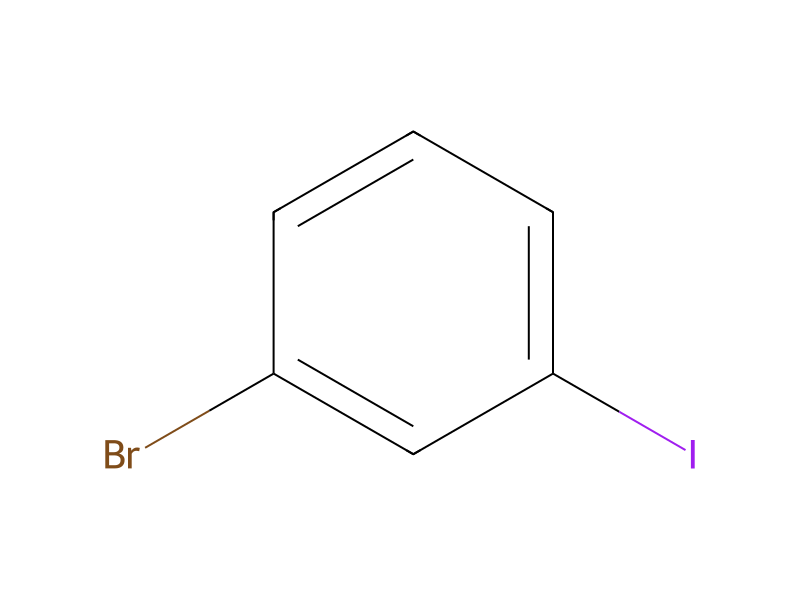
Product 1

Reagents, catalysts & solvents 3



Conditions
- Temperature
- 150 °C
Procedure
Under nitrogen, carbazole (24.3 g, 1 eq.) is added to a flask together with 1-bromo-3-iodobenzene (98%; 75.3 g, 1.9 eq.), potassium carbonate (48.2 g, 2.5 eq.) and copper (1.77 g, 0.1 eq.). The reaction is heated to 150° C. and stirred at 150° C. for 48 h. The mixture is cooled to room temperature and diluted with 150 mL of methylene chloride. 100 mL of demineralized water are added to the mixture, which is stirred. Removal of the aqueous phase is followed by washing a further 2× with demineralized water (100 mL). The organic phase is dried over sodium sulfate and concentrated. The excess 1-bromo-3-iodobenzene is distilled off under reduced pressure. LC (SiO2; cyclohexane/methylene chloride 95:5) gives 37.1 g of product (82.4% yield).
Workup
- temperatureThe mixture is cooled to room temperature
- stirringis stirred
- customRemoval of the aqueous phase
- washby washing a further 2× with demineralized water (100 mL)
- dry with materialThe organic phase is dried over sodium sulfate
- concentrationconcentrated
- distillationThe excess 1-bromo-3-iodobenzene is distilled off under reduced pressure
Sources & evidence
- ORD record
- ord-2b5d18e84d704e6ab53ff9e2691e344b
- Source dataset
- uspto-grants-2015_06
- Patent number
- US09067919B2
Reaction notes
Loading…