Methyl 2,2-difluoro-2-(fluorosulfonyl)acetate → 1-Chloro-2-fluoro-4-methoxy-3-(trifluoromethyl)benzene
Reaction equation

[Cl:1][C:2]1[CH:7]=[CH:6][C:5]([O:8][CH3:9])=[CH:4][C:3]=1[F:10].ClC1C=CC(OC)=C(I)C=1[F:21].[F:22][C:23]([F:32])(S(F)(=O)=O)C(OC)=O>[Cu](I)I>[Cl:1][C:2]1[CH:7]=[CH:6][C:5]([O:8][CH3:9])=[C:4]([C:23]([F:32])([F:21])[F:22])[C:3]=1[F:10]Participants
5
Reactant 3


Product 1

Reagents, catalysts & solvents 1
Procedure
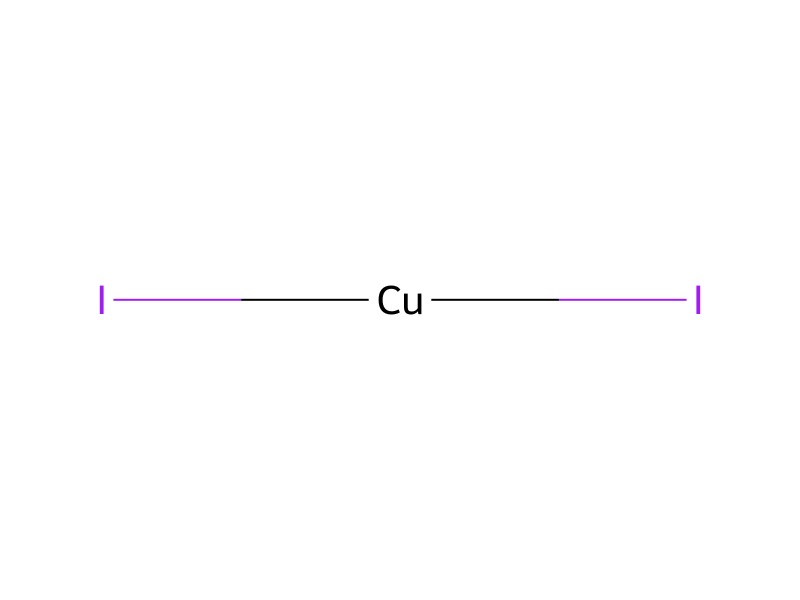
1-Chloro-2-fluoro-4-methoxybenzene was converted to 1-chloro-2-fluoro-3-iodo-4-methoxybenzene (see G. L. Grunewald et al., J. Med. Chem. 1986, 29, 1972-1982). 1-Chloro-2-fluoro-3-iodo-4-methoxybenzene was treated with methyl difluoro(fluorosulfonyl)acetate in the presence of copper iodide (A. Khilevich et al., U.S. Pat. Appl. Publ. 2010, US 20100016373) to provide 1-chloro-2-fluoro-4-methoxy-3-(trifluoromethyl)benzene. 4-Chloro-3-fluoro-2-(trifluoromethyl)phenol was then obtained by de-methylation using boron trichloride.
Sources & evidence
- ORD record
- ord-2688e207687b4d0bb4983e61e6354074
- Source dataset
- uspto-grants-2015_06
- Patent number
- US09067934B2
Reaction notes
Loading…