Dichloromethane → t-Butyl 4-[(3S)-4-Benzyl-3-methylpiperazin-1-yl]-4-cyanopiperidine-1-carboxylate
Reaction equation

[CH2:1]([N:8]1[CH2:13][CH2:12][NH:11][CH2:10][C@@H:9]1[CH3:14])[C:2]1[CH:7]=[CH:6][CH:5]=[CH:4][CH:3]=1.ClCCl.O=[C:19]1[CH2:24][CH2:23][N:22]([C:25]([O:27][C:28]([CH3:31])([CH3:30])[CH3:29])=[O:26])[CH2:21][CH2:20]1.[C-:32]#[N:33].C([Al+]CC)C>C1(C)C=CC=CC=1.CC(C)[O-].CC(C)[O-].CC(C)[O-].CC(C)[O-].[Ti+4]>[CH2:1]([N:8]1[CH2:13][CH2:12][N:11]([C:19]2([C:32]#[N:33])[CH2:24][CH2:23][N:22]([C:25]([O:27][C:28]([CH3:31])([CH3:30])[CH3:29])=[O:26])[CH2:21][CH2:20]2)[CH2:10][C@@H:9]1[CH3:14])[C:2]1[CH:7]=[CH:6][CH:5]=[CH:4][CH:3]=1Participants
Reactant 4

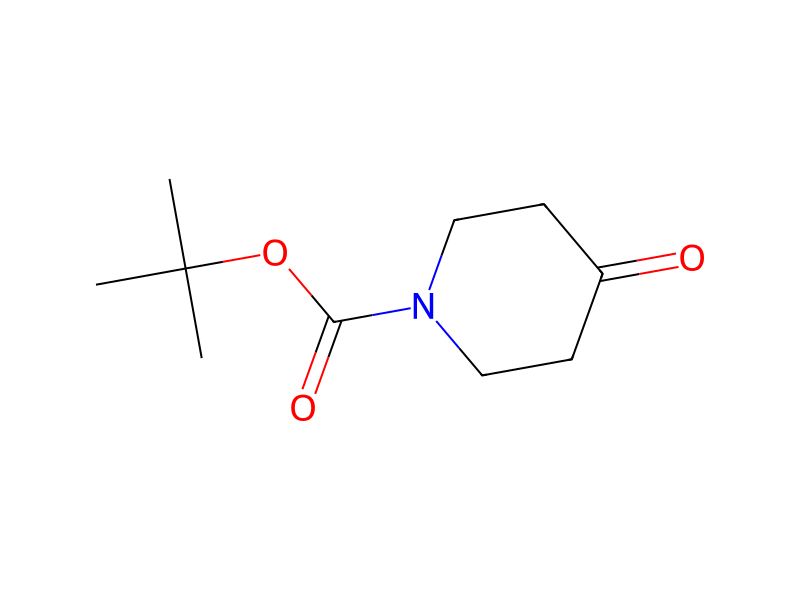


Product 1

Reagents, catalysts & solvents 2


Procedure
In a 5 L flask, (2S)-1-benzyl-2-methylpiperazine (260.0 g, 1.366 mol), dichloromethane (1000 mL), t-butyl 4-oxo-1-piperidinecarboxylate (272 g, 1.37 mol) and titanium tetraisopropoxide (480.0 mL, 1.626 mol) were mixed and the mixture was stirred at room temperature for 20 h. The mixture was cooled down to 0° C. and diethylaluminum cyanide in toluene (1.0 M, 1600 mL) was added dropwise. The resulting mixture was stirred at room temperature for 20 h. The reaction content was then split into two 5 L flasks, To each flask, 1 L of ethyl acetate, 500 g of sodium bicarbonate, 150 g of celite were added before they were cooled down to −40° C. using dry ice/acetonitrile. To each flask, 200 mL of saturated aqueous sodium sulfate was then slowly added with vigorous stirring. After the reaction mixture was slowly warmed up to room temperature and stirred for 4 hours, 1 L of methanol was added to each flask. After being stirred overnight, the reaction mixture was filtered through a thin layer of sand. The cake was taken back into a 5 L flask and stirred with 3 L of methanol for 5 hours, and insoluble solid was filtered off. The combined filtrates were concentrated to dryness, and 3 L of methylene chloride was added. Insoluble solid was filtered off. The filtrate was dried with magnesium sulfate, the solvent was removed to give 484 g (88.9%) of product as a slight yellow solid. The crude product was essentially pure and used directly for next step. 1H NMR (400 MHz, CDCl3) δ (ppm) 7.32 (m, 5H), 4.04 (d, 1H), 3.95 (brs, 2H), 3.15 (d, 1H), 3.15 (brs, 2H), 2.82 (m, 1H), 2.73 (m, 2H), 2.44 (m, 2H), 2.25 (t, 1H), 2.15 (m, 1H), 2.05 (m, 1H), 1.66 (m, 1H), 1.46 (s, 9H), 1.17 (d, 3H); MS (EI) 399.2 (M+1).
Workup
- temperatureThe mixture was cooled down to 0° C.
- stirringThe resulting mixture was stirred at room temperature for 20 h
- customThe reaction content was then split into two 5 L flasks, To each flask
- addition1 L of ethyl acetate, 500 g of sodium bicarbonate, 150 g of celite were added before they
- temperaturewere cooled down to −40° C.
- additionTo each flask, 200 mL of saturated aqueous sodium sulfate was then slowly added with vigorous stirring
- temperatureAfter the reaction mixture was slowly warmed up to room temperature
- stirringstirred for 4 hours
- addition1 L of methanol was added to each flask
- stirringAfter being stirred overnight
- filtrationthe reaction mixture was filtered through a thin layer of sand
- customThe cake was taken back into a 5 L flask
- stirringstirred with 3 L of methanol for 5 hours
- filtrationinsoluble solid was filtered off
- concentrationThe combined filtrates were concentrated to dryness, and 3 L of methylene chloride
- additionwas added
- filtrationInsoluble solid was filtered off
- dry with materialThe filtrate was dried with magnesium sulfate
- customthe solvent was removed
Sources & evidence
- ORD record
- ord-1d94d23025ab48bd999644d164aeb047
- Source dataset
- uspto-grants-2015_06
- Patent number
- US09067921B2
Reaction notes
Loading…