Hydrochloric Acid → (s)-2-Bromo-1-(4-bromophenyl)ethanol
Reaction equation

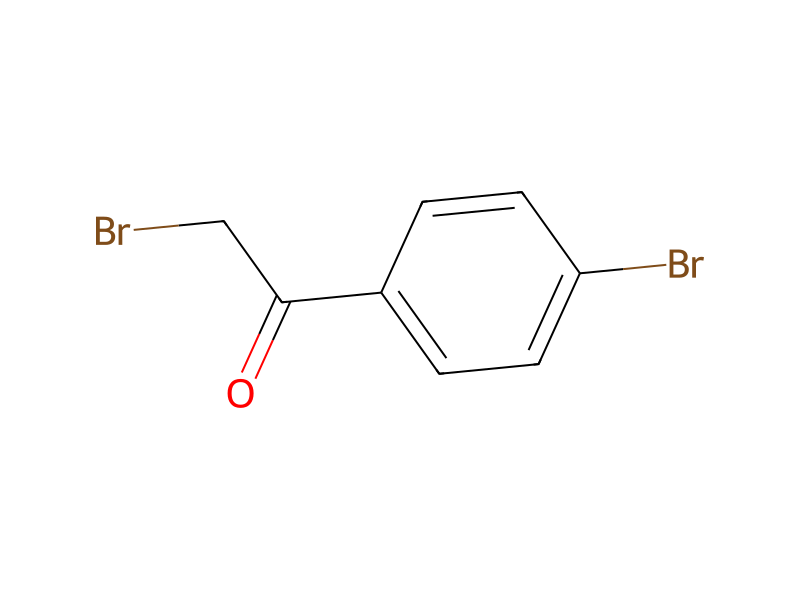
B1(C)OC(C2C=CC=CC=2)(C2C=CC=CC=2)[C@H]2N1CCC2.B.O1CCCC1.[Br:28][C:29]1[CH:38]=[CH:37][C:32]([C:33](=[O:36])[CH2:34][Br:35])=[CH:31][CH:30]=1.Cl>C1(C)C=CC=CC=1.ClCCl.CO>[Br:35][CH2:34][C@H:33]([C:32]1[CH:37]=[CH:38][C:29]([Br:28])=[CH:30][CH:31]=1)[OH:36]Participants
Reactant 4



Product 1

Reagents, catalysts & solvents 3



Conditions
- Temperature
- 0 °C
Procedure
(S)—CBS (25 ml, (S)-2-methyl-CBS-oxazaborolidine, manufactured by Aldrich, 1.0 M solution in toluene) was cooled to 0° C., and borane-tetrahydrofuran complex (185 ml, 185 mmol, 1.0 M solution in tetrahydrofuran) was added. After the flask was cooled by ice-sodium chloride bath, a solution of 4-bromophenacyl bromide (intermediate 8, 50. 28 g, 181 mmol) in dichloromethane (300 ml) was added dropwise over one hour while maintaining the temperature at −5° C. to 0° C. After stirring the mixture at 0° C. for 50 minutes, methanol (12 ml) was added by small portions. Then, 0.5 M hydrochloric acid (300 ml) was added dropwise and the mixture was stirred at room temperature for 40 minutes. The precipitate was filtered off and the filtrate was partitioned between dichloromethane and water. The organic layer was separated and the aqueous layer was extracted with methylene chloride. The organic layers were combined, washed twice with 0.5 M hydrochloric acid and brine, and dried over anhydrous sodium sulfate. The solvent was evaporated under reduced pressure to afford 2-bromo-1-(1S)-(4-bromophenyl)ethanol (intermediate 9) as a pale-brown oil. This crude product was used for next step without purification.
Workup
- temperatureAfter the flask was cooled by ice-sodium chloride bath
- temperaturewhile maintaining the temperature at −5° C. to 0° C
- stirringthe mixture was stirred at room temperature for 40 minutes
- filtrationThe precipitate was filtered off
- customthe filtrate was partitioned between dichloromethane and water
- customThe organic layer was separated
- extractionthe aqueous layer was extracted with methylene chloride
- washwashed twice with 0.5 M hydrochloric acid and brine
- dry with materialdried over anhydrous sodium sulfate
- customThe solvent was evaporated under reduced pressure
Sources & evidence
- ORD record
- ord-2a16211c12ff4cd8b14294cd528a38d6
- Source dataset
- uspto-grants-2012_06
- Patent number
- US08198437B2
Reaction notes
Loading…