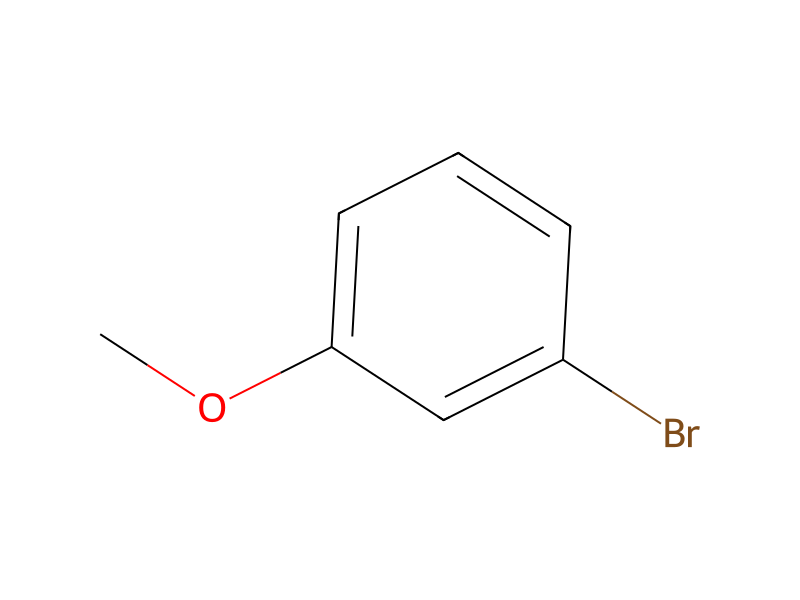
3-Bromoanisole → HCID 22397834, compound
Reaction equation

[CH2:1]([N:8]1[CH2:15][CH2:14][C:13]2([C:17]3[CH:22]=[CH:21][CH:20]=[C:19]([O:23][CH3:24])[CH:18]=3)[CH2:16][CH:9]1CC(=O)C2)[C:2]1[CH:7]=[CH:6][CH:5]=[CH:4][CH:3]=1.BrC1C=C([O:33]C)C=CC=1.C([Li])CCC.C(N1CCC(=O)CC1)C1C=CC=CC=1>C1COCC1>[CH3:24][O:23][C:19]1[CH:18]=[C:17]([C:13]2([OH:33])[CH2:14][CH2:15][N:8]([CH2:1][C:2]3[CH:7]=[CH:6][CH:5]=[CH:4][CH:3]=3)[CH2:9][CH2:16]2)[CH:22]=[CH:21][CH:20]=1Participants
Reactant 4



Product 1

Reagents, catalysts & solvents 1

Procedure
Note: The choice of piperidone in this synthesis is important in order to avoid the production of neurotoxic tetrahydropyridines such as 1-methyl-4-phenyl-1,2,3,6-tetrahydropyridine (MPTP). It has been demonstrated that the neurotoxic properties associated with MPTP or m-methoxy-MPTP are eliminated by any one of the following: N-substituents larger than methyl, piperidine ring substitution, and/or aryl substituents larger than methoxy.1-3 2,9-Dimethyl-5-(3-methoxyphenyl)-2-azabicyclo[3.3.1]nonan-7-one (17a): To a solution of 1500 mg (6.9 mmol) of tetrahydropyridine 15a4 and TMEDA (2.1 mL, 13.8 mmol) in 30 mL of THF at −42° C. was added s-BuLi in cyclohexane (1.3 M, 8.9 mmol). After 1 h, 2-(chloromethyl)-3,5-dioxa-1-hexene 18 (1.32 g, 9.7 mmol) was added, and the color of the solution changed slowly from dark red to yellow. After being stirred for 1 h at 42° C. and kept 3 h at −23° C., the mixture was allowed to warm to 0° C. and then quenched with 1N HCl (20 mL). Diethyl ether (20 mL) was added, and the aqueous layer was extracted with ether (2×). The aqueous layer was adjusted to pH 10 and extracted with diethyl ether (3×). The combined ether layers were washed with water (10 mL), saturated NaHCO3, brine, and dried over Na2SO4. Evaporation of solvent afforded 1.31 g (˜60%) of crude 16a. The crude product was used directly in the next step without further purification. 1H NMR (CDCl3) δ 7.27 (t, 1H, J=9.6 Hz), 7.02 (m, 2H), 6.72 (m, 1H), 5.83 (s, 1H), 4.93 (s, 2H), 3.81 (s, 3H), 3.43 (s, 3H), 2.70-2.40 (m, 8H), 2.52 (s, 3H), 1.61 (s, 3H). A solution of 500 mg of 16a in 3 mL of 6 M HCl and 25 mL of THF was stirred at room temperature for 72 h. The resulting brown mixture was neutralized with 10% NaOH (10 mL) until pH >9. The aqueous solution was extracted with diethyl ether (3×). The combined organic layers were washed with aqueous NaHCO3 and brine. The organic phase was dried over Na2SO4 and concentrated under reduced pressure. The NMR shows that the ratio of 17a to 17d is about 10:1. Separation by chromatography [10% (80% chloroform, 18% methanol, 2% NH4OH)/chloroform] gave 310 mg of 17a as a colorless oil (43% from 15a). 1H NMR (CDCl3) δ 7.28 (t, 1H, J=9.5 Hz), 6.93 (m, 1H), 6.86 (m, 1H), 6.76 (dd, 1H, J=2.2, 9.7 Hz), 3.81 (s, 3H), 3.13 (m, 1H), 3.0 (d, 1H, J=20.5 Hz), 2.76 (m, 1H), 2.66-2.17 (m, 6H), 2.36 (s, 3H), 1.76 (m, 1H), 0.93 (d, 3H, J=8.2 Hz). 13C NMR (CDCl3) 210.5, 159.6, 148.7, 129.4, 117.6, 112.2, 110.3, 61.7, 55.9, 55.0, 47.1, 42.8, 41.4, 39.6, 29.5, 13.8. Anal. Calcd. for C17H23NO2: . Found: C, 76.72; H, 8.62, N, 5.23. 2-Ethyl-5-(3-methoxyphenyl)-2-azabicyclo[3.3.1]nonan-7-one (17b): To a solution of 500 mg (2.3 mmol) of tetrahydropyridine 15b [1] and tetramethylethylene diamine (TMEDA) (0.69 mL, 4.6 mmol) in 15 mL of THF at 42° C. was added n-BuLi in hexanes (2.5M, 2.9 mmol). After 1 h, 2-(chloromethyl)-3,5-dioxa-1-hexene 18 (440 mg, 3.2 mmol) was added, and the color of the solution changed slowly from dark red to yellow. After being stirred for 1 h at −42° C. and kept 3 h at −23° C., the mixture was allowed to warm to 0° C. and then quenched with 1N HCl (10 mL). Diethyl ether (10 mL) was added, and the aqueous layer was extracted with ether (2×). The aqueous layer was adjusted to pH 10 and extracted with diethyl ether (3×). The combined ether layers were washed with water (10 mL), saturated NaHCO3, brine, and dried over Na2SO4. Evaporation of solvent afforded 510 mg (˜70%) of crude 16b. The crude product was used directly in the next step without further purification. 1H NMR (CDCl3) δ 7.20 (t, 1H, J=9.1 Hz), 6.97 (m, 2H), 6.67 (dd, 1H, J=1.9, 8.4 Hz), 6.03 (d, 1H, J=9.8 Hz), 4.74 (s, 2H), 4.69 (d, 1H, J=9.6 Hz), 3.79 (s, 3H), 3.26 (s, 3H), 2.86 (q, 2H, J=8.6 Hz), 2.80-2.39 (m, 6H), 2.12 (m, 2H), 1.02 (t, 3H, J=8.6 Hz). A solution of 510 mg of 16b in 3 mL of 6 M HCl and 25 mL of THF was stirred at room temperature for 72 h. The resulting brown mixture was neutralized with 10%NaOH (10 mL) until pH >9. The aqueous solution was extracted with diethyl ether (3×). The combined organic layers were washed with aqueous NaHCO3 and brine. The organic phase was dried over Na2SO4 and concentrated under reduced pressure. Separation by chromatography [10% (80% chloroform, 18% methanol, 2% NH4OH)/chloroform] gave 352 mg (80%, 47% from 15b) of 17b as colorless oil. 1H NMR (CDCl3) δ 7.28 (t, 1H, J=9.6 Hz), 6.92 (m, 2H), 6.78 (dd, 1H, J=3.0, 9.7 Hz), 3.81 (s, 3H), 3.60 (m, 1H), 2.82 (m, 3H), 2.55 (q, 2H, J=8.6 Hz), 2.44-1.92 (m, 7H), 1.10 (t, 3H, J=8.6 Hz). 13C NMR (CDCl3) 209.4, 158.7, 149.0, 128.5, 115.9, 110.2, 110.0, 54.1, 52.4, 52.2, 47.4, 44.4, 38.2, 37.6, 37.1, 36.7, 12.7. Anal. Calcd. for C17H23NO2: C, 74.69; H, 8.48; N, 5.12. Found: C, 74.78; H, 8.60; N, 5.24. 2-Benzyl-5-(3-methoxyphenyl)-2-azabicyclo[3.3.1]nonan-7-one (17c): 3-Bromoanisole (50.0 g, 0.264 mol) was dissolved in 150 mL of THF and then chilled to −78° C. n-Butyllithium (1.6M, 175 mL, 0.276 mol) was then added while maintaining the reaction temperature at −70° C. or below. After complete addition, the reaction mixture was stirred for an additional 60 min. 1-Benzyl-4-piperidone in 150 mL of THF was then added at such a rate as to maintain the reaction temperature at −70° C. or below. The reaction was stirred at −70° C. for an additional 15 min, then the dry ice-acetone bath was removed, and the reaction was allowed to come to room temperature. Brine (400 mL) was added, and the organic layer was separated and washed with an additional 300 mL of brine. The organic layer was separated, dried (K2CO3), and concentrated in vacuo. 6N HCl (250 mL) was added to the oily residue which was then washed with EtOAc. The aqueous layer was separated, basified with 50% NaOH, and extracted with EtOAc. The EtOAc layer was separated, dried (K2CO3), and concentrated in vacuo to give 75.7 g of 4-(3-methoxyphenyl)-1-benzyl-4-piperidinol as an orange oil. A sample was chromatographed on silica gel using hexane/EtOAc (7:3) mixtures as the eluent to afford a yellow oil which was dissolved in ether and treated with ethereal hydrochloric acid to give 4-(3-methoxyphenyl)-1-benzyl-4-piperidinol hydrochloride as a white solid (mp 195-197° C.). 1H NMR (CDCl3) (free base) δ (ppm) 1.64-1.75 (m, 2H), 2.09-2.21 (m, 2H), 2.41-2.51 (m, 2H), 2.71-2.80 (m, 2H), 3.51 (s, 2H), 3.80 (s, 3H), 6.77-6.81 (m, 1H), 7.06-7.09 (m, 2H), 7.23-7.35 (m, 6H). Anal. Calcd for C19H23NO2HCl.½ H2O: C, 66.56; H, 7.06; N, 4.09. Found: C, 66.41; H, 7.31; N, 4.33. This material, 4-(3-methoxyphenyl)-1-benzyl-4-piperidinol (75.7 g, 0.25 mol), was dissolved in 400 mL of toluene, tosic acid (101.4 g, 0.53 mol) was added, and the mixture was heated under reflux in a Dean Stark trap for 90 min. The reaction mixture was cooled to room temperature, and water (400 mL) was added. The bottom layers were separated, made basic with 5N NaOH, and extracted with EtOAc. The EtOAc layer was separated, washed with brine, dried (K2CO3), and concentrated in vacuo to give 73.0 g of a red-orange oil. The oil was chromatographed on silica gel using hexane/EtOAc (4:1) mixtures as the eluent to afford 54.2 g of 1,2,3,6-tetrahydro-4-(3-methoxyphenyl)-1-benzylpyridine 15c (78%) as an orange oil. A sample of the free base was converted to its hydrochloride salt (ethereal HCl) to give 1,2,3,6-tetrahydro-4-(3-methoxyphenyl)-1-benzylpyridine hydrochloride as a white solid (mp 196-196° C.). 1H NMR (CDCl3) (free base) δ (ppm) 2.54-2.57 (br m, 2H), 2.68-2.73 (m, 2H), 3.14-3.18 (m, 2H), 3.63 (s, 2H), 3.78 (s, 3H), 6.04-6.07 (m, 1H), 6.79 (dd, 1H), 6.91-7.00 (m, 2H), 7.19-7.39 (m, 6H). Anal. Calcd. for C19H21NO.HCl.¼H2O: C, 71.46; H, 6.79; N, 4.39. Found: C, 71.63; H, 6.97; N, 4.42. 1,2,3,6-Tetrahydro-4-(3-methoxyphenyl)-1-benzylpyridine 15c (5.0 g, 0.018 mol) was dissolved in 70 mL of THF and chilled to −78° C. in a dry ice-acetone bath. N-Butyllithium (1.6M, 12.0 mL, 0.0193 mol) was added to the reaction mixture at a rate that would maintain the temperature at −70° C. or below. After complete addition, the reaction was stirred for an additional 15 min, and the dry ice bath was replaced with a salt-ice bath. When the temperature rose to −15° C., 2-(chloromethyl)-3,5-dioxahex-1-ene 18 (3.2 g, 0.023 mol) in 40 mL of THF was added while keeping the reaction temperature at −10° C. or below and stirring for an additional 15 min at −15° C. The bath was removed, and the reaction was stirred at room temperature for an additional 17 h. The reaction was quenched with 30 mL of brine, the organic layer was separated, washed with 2×100 mL of brine, separated, dried (K2CO3), and concentrated in vacuo to get 6.8 g of an orange oil. This was dissolved in 100 mL of THF, and 20 mL of 6N HCl was added. This reaction was stirred at room temperature overnight. The reaction mixture was neutralized with aqueous NaHCO3, added 100 mL of EtOAc, and separated the organic layer. The organic layer was washed with 10%/a NaHCO3, brine, then separated, dried(K2CO3), and concentrated in vacuo to give 4.8 g of 17c as a red oil. The oil was chromatographed on silica gel using hexane/EtOAc (65:35) mixtures, as the eluent, to yield an oil which crystallized upon addition of ether to give 2.5 g (42%) of 5-(3-methoxyphenyl)-2-benzyl-2-azabicyclo[3.3.1]nonan-7-one 17c as a beige solid (mp 108-109° C.). 1H NMR (CDCl3) δ (ppm) 1.88-1.91 (m, 2H), 2.12-2.21 (m, 2H), 2.31-2.49 (m, 3H), 2.75-2.99 (m, 3H), 3.49 (br m, 1H), 3.60-3.72 (q, 2H), 3.80 (s, 3H), 6.75-6.80 (m, 1H), 6.88-6.96 (m, 2H), 7.25-7.34 (m, 6H). 13C NMR (CDCl3) δ 210.4, 159.8, 150.2, 138.7, 129.5, 128.6, 128.3, 127.0, 117.0, 111.3, 111.0, 59.0, 55.2, 53.7, 53.3, 45.5, 39.2, 38.7, 38.0, 37.7. Anal. Calcd. for C22H25NO2: C, 78.77; H, 7.51; N, 4.18. Found: C, 78.76; H, 7.59; N, 4.20. Reference
Workup
- additionwas then added
- temperaturewhile maintaining the reaction temperature at −70° C. or below
- additionAfter complete addition
- temperatureto maintain the reaction temperature at −70° C. or below
- stirringThe reaction was stirred at −70° C. for an additional 15 min
- customthe dry ice-acetone bath was removed
- customto come to room temperature
- additionBrine (400 mL) was added
- customthe organic layer was separated
- washwashed with an additional 300 mL of brine
- customThe organic layer was separated
- dry with materialdried (K2CO3)
- concentrationconcentrated in vacuo
- addition6N HCl (250 mL) was added to the oily residue which
- washwas then washed with EtOAc
- customThe aqueous layer was separated
- extractionextracted with EtOAc
- customThe EtOAc layer was separated
- dry with materialdried (K2CO3)
- concentrationconcentrated in vacuo
Sources & evidence
- ORD record
- ord-6d19d720186847ac82805cdb973484d1
- Source dataset
- uspto-grants-2005_05
- Patent number
- US06900228B1
Reaction notes
Loading…