Water → HCID 22473582, compound
Reaction equation

Br[C:2]1[CH:7]=[CH:6][C:5]([F:8])=[C:4]([N+:9]([O-:11])=[O:10])[CH:3]=1.[Br-].[C:13]([C:15]1[CH:20]=[CH:19][CH:18]=[CH:17][C:16]=1[Zn+])#[N:14].O>O1CCCC1.C1C=CC([P]([Pd]([P](C2C=CC=CC=2)(C2C=CC=CC=2)C2C=CC=CC=2)([P](C2C=CC=CC=2)(C2C=CC=CC=2)C2C=CC=CC=2)[P](C2C=CC=CC=2)(C2C=CC=CC=2)C2C=CC=CC=2)(C2C=CC=CC=2)C2C=CC=CC=2)=CC=1>[F:8][C:5]1[CH:6]=[CH:7][C:2]([C:16]2[C:15]([C:13]#[N:14])=[CH:20][CH:19]=[CH:18][CH:17]=2)=[CH:3][C:4]=1[N+:9]([O-:11])=[O:10]Participants
6





Procedure
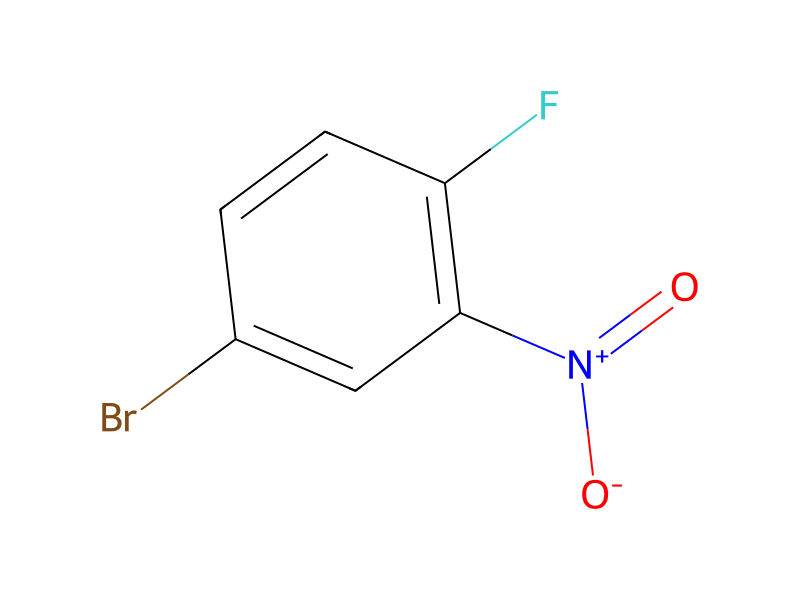
A mixture of 4-bromo-1-fluoro-2-nitrobenzene (9.68 g, 44 mmol) and tetrakis(triphenylphosphine)palladium(0) (1.53 g, 1.3 mmol) was treated with 2-cyanophenylzinc bromide (100 ml of a 0.5M solution in tetrahydrofuran, 50 mmol) then heated under reflux for 8 h. After cooling to ambient temperature the reaction mixture was poured into water (1000 ml). After stirring for 30 min the resulting solid was collected by filtration and dried under vacuum over phosphorus pentoxide to afford 4′-fluoro-3′-nitrobiphenyl-2-carbonitrile as a tan solid (10.7 g, 100%) which was used without further purification.
Workup
- temperaturethen heated
- temperatureunder reflux for 8 h
- filtrationwas collected by filtration
- dry with materialdried under vacuum over phosphorus pentoxide
Sources & evidence
- ORD record
- ord-72b0a83eb0fc466cb0f994defea7aae4
- Source dataset
- uspto-grants-2005_05
- Patent number
- US06900215B2
Reaction notes
Loading…