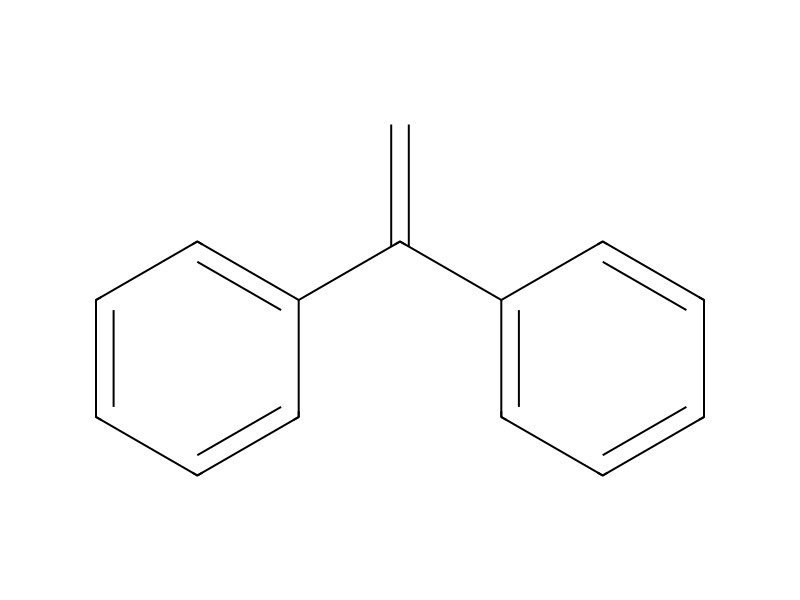
1,1-Diphenylethylene → HCID 178420228, compound
Reaction equation

C1([C:7]([C:9]2[CH:14]=[CH:13][CH:12]=[CH:11][CH:10]=2)=[CH2:8])C=CC=CC=1.[CH2:15]([Ba:22][CH2:23][C:24]1[CH:29]=[CH:28][CH:27]=[CH:26][CH:25]=1)[C:16]1[CH:21]=[CH:20][CH:19]=[CH:18][CH:17]=1>C(C1C=CC=CC=1)C.O1CCCC1>[C:24]1([C:23]([Ba:22][C:15]([C:24]2[CH:29]=[CH:28][CH:27]=[CH:26][CH:25]=2)([C:16]2[CH:21]=[CH:20][CH:19]=[CH:18][CH:17]=2)[CH2:8][CH2:7][C:9]2[CH:10]=[CH:11][CH:12]=[CH:13][CH:14]=2)([C:16]2[CH:21]=[CH:20][CH:19]=[CH:18][CH:17]=2)[CH2:8][CH2:7][C:9]2[CH:14]=[CH:13][CH:12]=[CH:11][CH:10]=2)[CH:29]=[CH:28][CH:27]=[CH:26][CH:25]=1Participants
5
Reactant 2

Product 1

Reagents, catalysts & solvents 2


Procedure
2.50 ml (14.15 mmol) of 1,1-diphenylethylene were added at 25° C. to a suspension of 1.78 g (5.58 mmol) of dibenzylbarium in 70 ml of ethylbenzene and 10 ml of tetrahydrofuran (THF). Stirring for 14 hours resulted in a deep red solution. The solution was filtered off from small amounts of insoluble constituents and then evaporated to dryness. Solvent-free bis(1,1,3-triphenylpropyl)barium was firstly obtained as a very viscous, red-violet oil and, after prolonged drying, as a tough solid. The conversion was virtually quantitative.
Workup
- customresulted in a deep red solution
- filtrationThe solution was filtered off from small amounts of insoluble constituents
- customevaporated to dryness
Sources & evidence
- ORD record
- ord-e973b1ad4e6c45888ec8121443bd2728
- Source dataset
- uspto-grants-2002_06
- Patent number
- US06399727B1
Reaction notes
Loading…