Ethylenediamine → 1-Methyl-3-(2-methyl-4-nitrophenyl)tetrahydropyrimidin-2(1H)-one
Reaction equation

P([O-])([O-])([O-])=O.[K+].[K+].[K+].I[C:10]1[CH:15]=[CH:14][C:13]([N+:16]([O-:18])=[O:17])=[CH:12][C:11]=1[CH3:19].[CH3:20][N:21]1[CH2:26][CH2:25][CH2:24][NH:23][C:22]1=[O:27].NCCN>O1CCOCC1.[Cu]I>[CH3:20][N:21]1[CH2:26][CH2:25][CH2:24][N:23]([C:10]2[CH:15]=[CH:14][C:13]([N+:16]([O-:18])=[O:17])=[CH:12][C:11]=2[CH3:19])[C:22]1=[O:27]Participants
Reactant 4
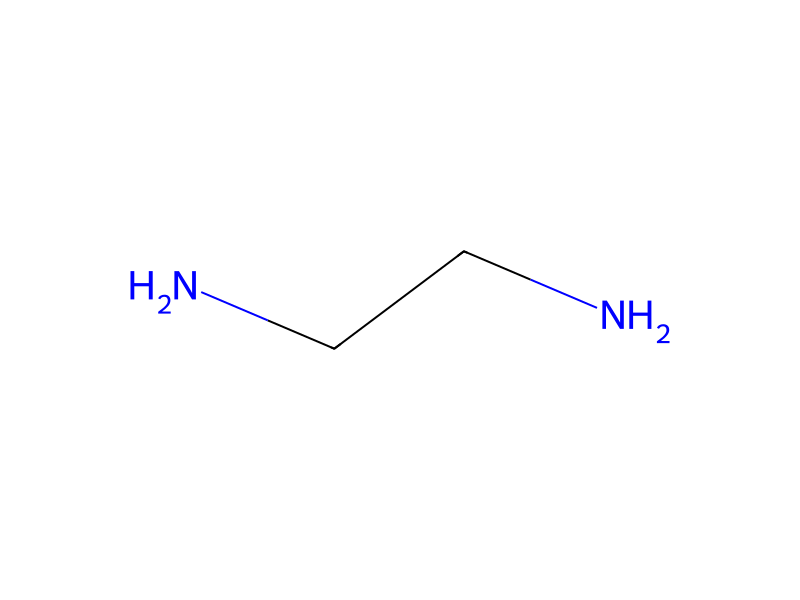



Product 1

Reagents, catalysts & solvents 2


Conditions
- Temperature
- 110 °C
Procedure
16.1 g (76.1 mmol) of potassium phosphate and 0.362 g (1.90 mmol) of copper(I) iodide are initially charged, and the apparatus is baked out and then flushed with argon. 10.0 g (38.1 mmol) of 1-iodo-2-methyl-4-nitrobenzene, 6.51 g (57.0 mmol) of 1-methyltetrahydropyrimidin-2(1H)-one and 0.394 g (3.80 mmol) of N,N′-dimethylenediamine in 200 ml of dioxane are added, and the mixture is stirred at 110° C. After 19 h, after cooling, the mixture is filtered with suction through kieselguhr and then washed three times with 100 ml of ethyl acetate. The solvent is removed under reduced pressure and the residue is purified by chromatography on silica gel (2:1→1:1 cyclohexane/ethyl acetate). This affords 5.94 g (63% of theory) of the desired compound.
Workup
- customflushed with argon
- temperatureafter cooling
- filtrationthe mixture is filtered with suction through kieselguhr
- washwashed three times with 100 ml of ethyl acetate
- customThe solvent is removed under reduced pressure
- customthe residue is purified by chromatography on silica gel (2:1→1:1 cyclohexane/ethyl acetate)
Sources & evidence
- ORD record
- ord-ba33e8432fa84103a431bb4b22c92229
- Source dataset
- uspto-grants-2012_06
- Patent number
- US08198267B2
Reaction notes
Loading…