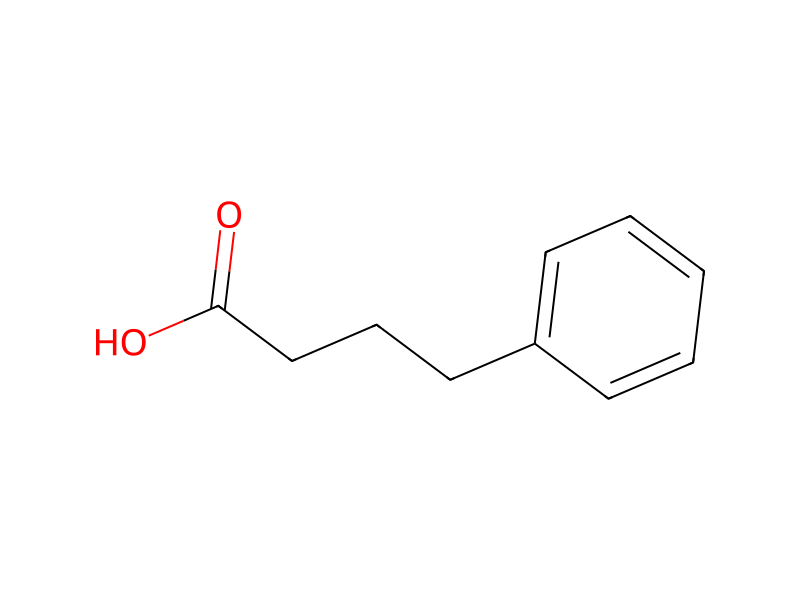
4-Phenylbutyric Acid → HCID 21341798, compound
Reaction equation

O=C1N(P(Cl)(N2CCOC2=O)=O)CCO1.C(N(C(C)C)CC)(C)C.[C:25]([O:29][C:30]([N:32]1[CH2:37][CH2:36][NH:35][CH2:34][CH2:33]1)=[O:31])([CH3:28])([CH3:27])[CH3:26].[C:38]1([CH2:44][CH2:45][CH2:46][C:47](O)=[O:48])[CH:43]=[CH:42][CH:41]=[CH:40][CH:39]=1>ClCCl>[C:25]([O:29][C:30]([N:32]1[CH2:37][CH2:36][N:35]([C:47](=[O:48])[CH2:46][CH2:45][CH2:44][C:38]2[CH:43]=[CH:42][CH:41]=[CH:40][CH:39]=2)[CH2:34][CH2:33]1)=[O:31])([CH3:28])([CH3:26])[CH3:27]Participants
6





Procedure
Bis(2-oxo-3-oxazolidinyl)phosphinic chloride (2.33 g) and diisopropylethylamine (3.2 mL) were added to a solution of N-tert-butoxycarbonylpiperazine (1.13g) and 4-phenylbutyric acid (1.0 g) in dichloromethane (50 mL) at 0° C. After stirring at room temperature for 20 hr, the solvent was evaporated in vacuo. Ethyl acetate and 10% citric acid aqueous solution were added to the residue. The separated organic layer was washed with saturated sodium hydrogen carbonate, dried over sodium sulfate, and evaporated in vacuo to afford the titled compound (2.68 g) as a colorless solid: 1H NMR(400 MHz, CDCl3) δ 1.47(s, 9H), 1.98(t, 2H), 2.32 (t, 2H), 2.68 (t, 2H)3.34-3.59 (m, 8H), and 7.17-7.30 (m, 5H).
Workup
- customthe solvent was evaporated in vacuo
- additionEthyl acetate and 10% citric acid aqueous solution were added to the residue
- washThe separated organic layer was washed with saturated sodium hydrogen carbonate
- dry with materialdried over sodium sulfate
- customevaporated in vacuo
Sources & evidence
- ORD record
- ord-e38ffd2c445d408cb5909e24f5c5749b
- Source dataset
- uspto-grants-2002_06
- Patent number
- US06399629B1
Reaction notes
Loading…