L-Serine → HCID 3511189, compound
Reaction equation

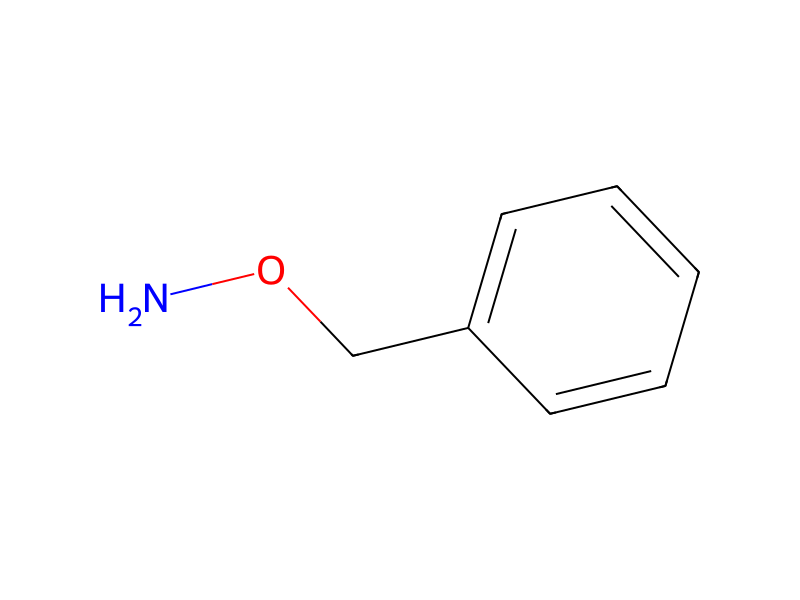
N[C@H](C(O)=O)CO.[OH:8][CH2:9][CH:10]([C:19]([OH:21])=O)[NH:11][C:12]([O:14][C:15]([CH3:18])([CH3:17])[CH3:16])=[O:13].[CH2:22]([O:29][NH2:30])[C:23]1[CH:28]=[CH:27][CH:26]=[CH:25][CH:24]=1.CCN=C=NCCCN(C)C.Cl>>[OH:8][CH2:9][CH:10]([C:19]([NH:30][O:29][CH2:22][C:23]1[CH:28]=[CH:27][CH:26]=[CH:25][CH:24]=1)=[O:21])[NH:11][C:12]([O:14][C:15]([CH3:16])([CH3:17])[CH3:18])=[O:13]Participants



Procedure
The 2,3-diaminopropionic acid esters, NH2—CH—[CH(R3)—NH2]—C(O)ester, are prepared as follows. t-Boc protected serine, HOCH2CH(NH-t-Boc)COOH, is coupled with O-benzylhydroxylamine at pH 4-5 with EDC HCl to provide the hydroxamate, HOCH2CH(NH-t-Boc)CONHOBn. The latter is cyclized in acetonitrile with triphenylphosphene-carbon tetrachloride in the presence of triethylamine to form the β-lactam, 1-benzyloxy-3-t-Boc-aminoazetidin-2-one. The β-lactam is then saponified with lithium hydroxide to provide, in 100% yield, the 2,3-diaminopropionic acid derivative, BnONHCH2CH(NH-t-Boc)COOH. In the above Bn is benzyl. The carboxylic acid group of the derivative obtained is esterified for use in the coupling reaction of Reaction scheme 3. The OBn protecting group is left intact during the coupling reaction while the t-Boc protecting group is removed to provide the free amino group involved in the coupling. Following amide formation the OBn group is removed via hydrogenation to provide the free amino amide ester for cyclization to the imidazoline. The above sequence of reactions is illustrated below.
Sources & evidence
- ORD record
- ord-19a5e5b11795487ab110b64e1f3fd858
- Source dataset
- uspto-grants-2002_06
- Patent number
- US06403623B1
Reaction notes
Loading…