8-Hydroxyquinoline → 8,8'-Oxydiquinoline
Reaction equation

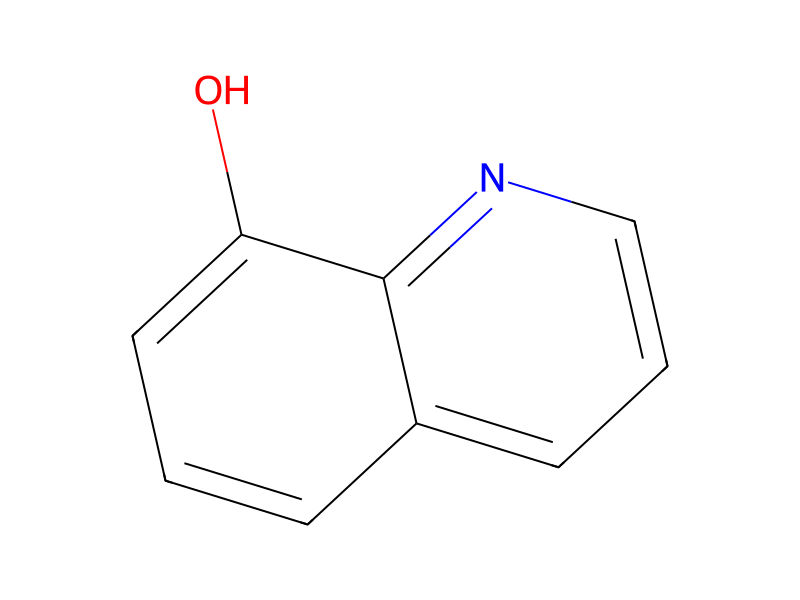
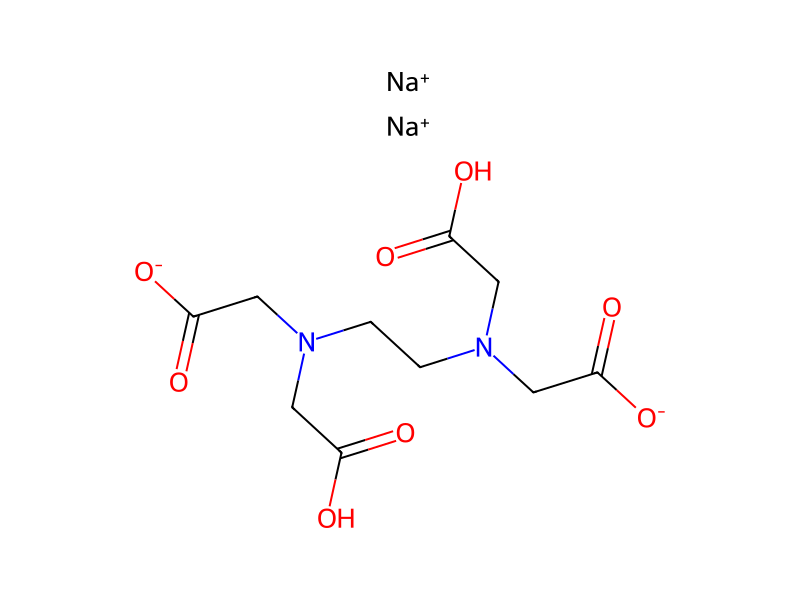
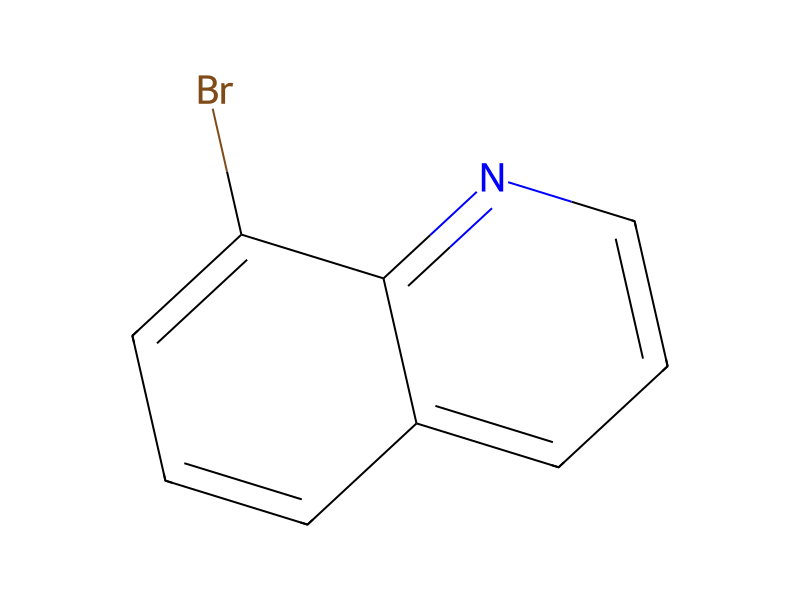
C(=O)([O-])[O-].[Cs+].[Cs+].Br[C:8]1[CH:9]=[CH:10][CH:11]=[C:12]2[C:17]=1[N:16]=[CH:15][CH:14]=[CH:13]2.[OH:18][C:19]1[CH:20]=[CH:21][CH:22]=[C:23]2[C:28]=1[N:27]=[CH:26][CH:25]=[CH:24]2.C(N(CC([O-])=O)CC(O)=O)CN(CC([O-])=O)CC(O)=O.[Na+].[Na+]>CN(C=O)C.C(Cl)Cl>[O:18]([C:19]1[CH:20]=[CH:21][CH:22]=[C:23]2[C:28]=1[N:27]=[CH:26][CH:25]=[CH:24]2)[C:8]1[CH:9]=[CH:10][CH:11]=[C:12]2[C:17]=1[N:16]=[CH:15][CH:14]=[CH:13]2Participants




Procedure
The product has already been described in: V. M. Dziomko et al., Yakugaku Zasshi 1951, 71, 452-455; but using a different method of synthesis. Caesium carbonate (156 mg; 0.48 mmol), 8-bromoquinoline (32 μl; 50 mg; 0.24 mmol) and CuCl2.2H2O (4.1 mg; 0.024 mmol) are added to a solution under argon of 8-hydroxyquinoline (71 mg; 0.49 mmol) in 2.0 ml of dry DMF. The mixture is heated under reflux for 72 hours. After cooling, 5 ml of CH2Cl2 and 5 ml of a 0.12 M aqueous solution of EDTA disodium salt are added. The organic phase is recovered and the aqueous phase is subsequently extracted with CH2Cl2 (2×5 ml). The organic phases are combined and washed once with 5 ml of 0.12 M EDTA in H2O then in water. The volume is reduced under reduced pressure then the reaction crude product is purified by silica gel chromatography, eluted with a gradient of 50 to 100% of ethyl acetate in toluene (v/v) then with 100% of CH3OH and the solvent is evaporated to recover 15, from the methanol phase, in the form of a white powder (13 mg; 0.046 mmol, yield=19%). NMR-1H (250 MHz, CDCl3) δ, ppm: 8.95 (dd, 3J (H, H)=4.0 Hz, 4J (H, H)=1.5 Hz, 2H); 8.21 (dd, 3J (H, H)=8.5 Hz, 4J (H, H)=1.5 Hz, 2H); 7.61 (dd, 3J (H, H)=8.0 Hz, 4J (H, H)=1.0 Hz, 2H); 7.46 (dd, 3J (H, H)=4.0 Hz and 8.5 Hz, 2H); 7.42 (dd, 3J (H, H)=7.5 Hz and 8.0 Hz, 2H); 7.14 (dd, 3J (H, H)=7.5 Hz, 4J (H, H)=1.0 Hz, 2H). MS (CID, NH3): m/z=273 (MH+). UV/vis [CH3OH/20 mM Tris-HCl pH=7.4 containing 150 mM NaCl (1/1, v/v)]: λ nm (ε M−1 cm−1)=232 (53,300), 240 (42,900), 2994 (9,400), 327 (5,800, shoulder).
Workup
- customa different method of synthesis
- temperatureThe mixture is heated
- temperatureunder reflux for 72 hours
- temperatureAfter cooling
- customThe organic phase is recovered
- extractionthe aqueous phase is subsequently extracted with CH2Cl2 (2×5 ml)
- washwashed once with 5 ml of 0.12 M EDTA in H2O
- customthe reaction crude product
- customis purified by silica gel chromatography
- washeluted with a gradient of 50 to 100% of ethyl acetate in toluene (v/v)
- customwith 100% of CH3OH and the solvent is evaporated
- customto recover 15
- additionUV/vis [CH3OH/20 mM Tris-HCl pH=7.4 containing 150 mM NaCl (1/1
Sources & evidence
- ORD record
- ord-bf67e557d977404b9cc8784e32c6fc9f
- Source dataset
- uspto-grants-2012_12
- Patent number
- US08324196B2
Reaction notes
Loading…