Cesium carbonate → Ethyl 3-(4-cyano-1H-indazol-1-yl)-2,2-dimethylpropanoate
Reaction equation

[NH:1]1[C:9]2[CH:8]=[CH:7][CH:6]=[C:5]([C:10]#[N:11])[C:4]=2[CH:3]=[N:2]1.Br[CH2:13][C:14]([CH3:21])([CH3:20])[C:15]([O:17][CH2:18][CH3:19])=[O:16].C([O-])([O-])=O.[Cs+].[Cs+]>CN(C=O)C>[C:10]([C:5]1[CH:6]=[CH:7][CH:8]=[C:9]2[C:4]=1[CH:3]=[N:2][N:1]2[CH2:13][C:14]([CH3:21])([CH3:20])[C:15]([O:17][CH2:18][CH3:19])=[O:16])#[N:11]Participants
5




Procedure
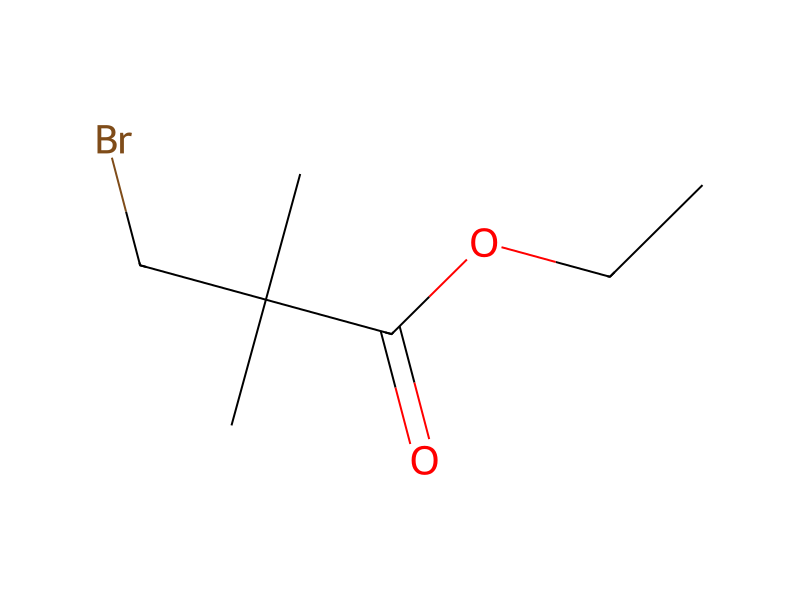
1H-Indazole-4-carbonitrile (commercially available from Insight Chemical Solutions Ltd.) (500 mg, 3.49 mmol), ethyl 3-bromo-2,2-dimethylpropanoate (D98) (803 mg, 3.84 mmol) and Cs2CO3 (1.36 g, 4.19 mmol) in dry DMF (3 ml) was heated to 80° C. overnight and then for a further 7 hours. The reaction mixture was then partitioned between EtOAc and H2O. The two layers were separated and the organic phase was washed with more H2O, brine, dried and concentrated a yellow oil. Purification of the residue by flash chromatography on silica gel [gradient ethyl acetate/cyclohexane] gave the title compound (356 mg, 37%) as a crystalline material. MS (ES) C15H17N3O2 requires 271, found 272 [M+H]+
Workup
- customThe reaction mixture was then partitioned between EtOAc and H2O
- customThe two layers were separated
- washthe organic phase was washed with more H2O, brine
- customdried
- concentrationconcentrated a yellow oil
- customPurification of the residue by flash chromatography on silica gel [gradient ethyl acetate/cyclohexane]
Sources & evidence
- ORD record
- ord-be2a687499be4d2da3725b5b83b2293f
- Source dataset
- uspto-grants-2012_12
- Patent number
- US08324254B2
Reaction notes
Loading…