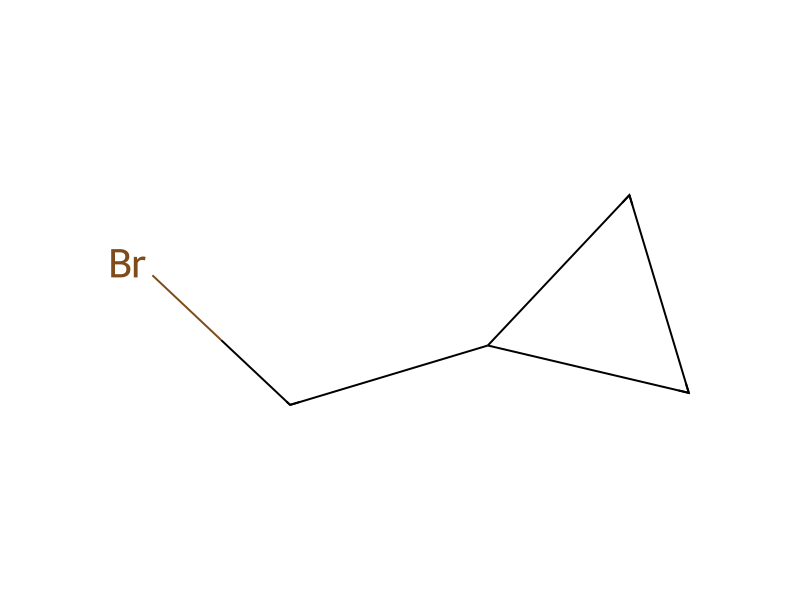
Bromomethylcyclopropane → Ethyl 2-(cyclopropylmethyl)-1,3-dithiane-2-carboxylate
Reaction equation

Br[CH2:2][CH:3]1[CH2:5][CH2:4]1.[C:6]([CH:11]1[S:16][CH2:15][CH2:14][CH2:13][S:12]1)([O:8][CH2:9][CH3:10])=[O:7]>>[CH:5]1([CH2:4][C:11]2([C:6]([O:8][CH2:9][CH3:10])=[O:7])[S:12][CH2:13][CH2:14][CH2:15][S:16]2)[CH2:3][CH2:2]1Participants
3


Procedure
Preferably R3 is methyl, ethyl or isopropyl. Most preferably R3 is ethyl and the compound of Formula 5 is prepared by (a) reacting bromomethylcyclopropane with 2-carboethoxy-1,3-dithiane in the presence of a strong base to give ethyl 2-(cyclopropylmethyl)-1,3-dithiane-2-carboxylate; (b) reacting the ethyl 2-(cyclopropylmethyl)-1,3-dithiane-2-carboxylate with N-bromosuccinimide to give ethyl 3-cyclopropyl-2-oxopropanoate; and (c) reacting the ethyl 3-cyclopropyl-2-oxopropanoate with bis(2-methoxyethyl)aminosulfur trifluoride.
Sources & evidence
- ORD record
- ord-ed6ffba63c2b44bba48163bed3a7a481
- Source dataset
- uspto-grants-2012_12
- Patent number
- US08324417B2
Reaction notes
Loading…