Glycidyl methacrylate → Propylene glycol methyl ether acetate
Reaction equation

[C:1]([O:6][CH:7]([O:9][CH2:10][CH2:11][CH2:12][CH3:13])[CH3:8])(=[O:5])[C:2]([CH3:4])=[CH2:3].[C:14]([O:19][CH2:20][CH:21]1[O:23][CH2:22]1)(=[O:18])[C:15]([CH3:17])=[CH2:16].[CH2:24](C(C)=O)C(C)C.N(C(C)(CC)C([O-])=O)=NC(C)(CC)C([O-])=O>CCCCCCC>[C:1]([O:6][CH:7]([O:9][CH2:10][CH2:11][CH2:12][CH3:13])[CH3:8])(=[O:5])[C:2]([CH3:4])=[CH2:3].[C:14]([O:19][CH2:20][CH:21]1[O:23][CH2:22]1)(=[O:18])[C:15]([CH3:17])=[CH2:16].[C:14]([O:19][CH:20]([CH3:24])[CH2:21][O:23][CH3:22])(=[O:18])[CH3:15]Participants
Reactant 4
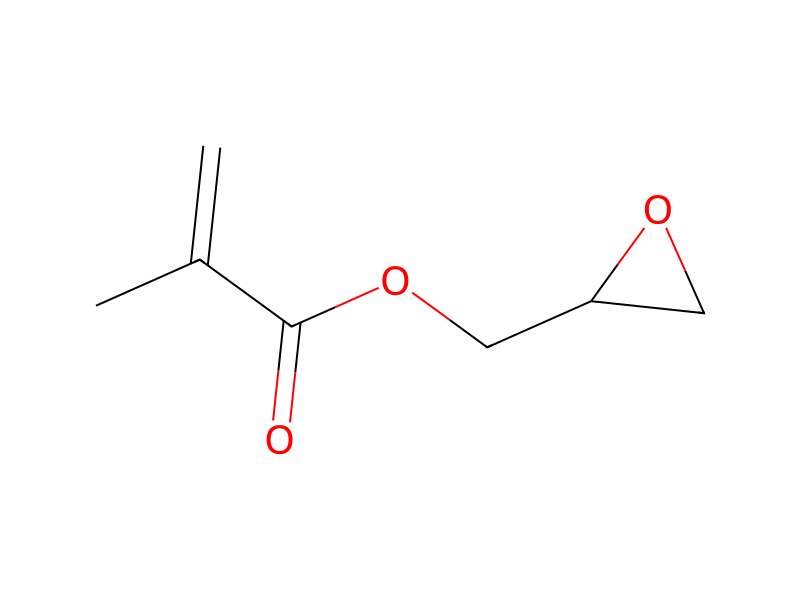


Product 2


Reagents, catalysts & solvents 1

Procedure
Into a 500 ml-volume three-neck flask, 67.1 g (0.36 mol) of 1-n-butoxyethyl methacrylate, 34.1 g (0.24 mol) of glycidyl methacrylate and 300 ml of methyl isobutyl ketone were charged. A catalytic amount of 2,2′-azobis(methyl 2-methylpropionate) was added thereto as a radical polymerization initiator, and polymerization was allowed to proceed at 80° C. for 6 hours in a nitrogen stream. The reaction solution was cooled and then poured in a large amount of heptane to precipitate a polymer. The crystal was collected by filtration and dissolved in propylene glycol monomethyl ether acetate, and heptane and methyl isobutyl ketone contained in the solution were removed by distillation under reduced pressure to obtain Polymer A-1 (1-n-butoxyethyl methacrylate/glycidyl methacrylate) as a propylene glycol monomethyl ether acetate solution.
Workup
- customas a radical polymerization initiator, and polymerization
- temperatureThe reaction solution was cooled
- customto precipitate a polymer
- filtrationThe crystal was collected by filtration
- dissolutiondissolved in propylene glycol monomethyl ether acetate
- customwere removed by distillation under reduced pressure
Sources & evidence
- ORD record
- ord-559355edd96d43b9b491feadc9f7fa28
- Source dataset
- uspto-grants-2012_12
- Patent number
- US08329380B2
Reaction notes
Loading…