Benzoylacetone → HCID 67530918, compound
Reaction equation

[C:1]([CH2:9][C:10](=[O:12])[CH3:11])(=[O:8])[C:2]1[CH:7]=[CH:6][CH:5]=[CH:4][CH:3]=1.[C:13]([O:17][CH3:18])(=[O:16])[CH:14]=[CH2:15]>>[C:13]([O:17][CH3:18])(=[O:16])[CH:14]=[CH2:15].[C:1]([CH2:9][C:10](=[O:12])[CH3:11])(=[O:8])[C:2]1[CH:7]=[CH:6][CH:5]=[CH:4][CH:3]=1Participants

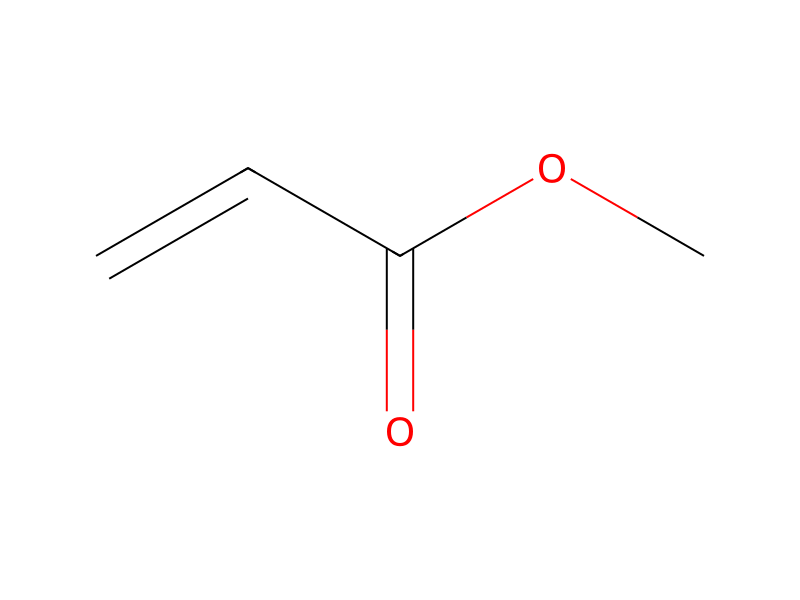

Procedure
A 100 ml four-necked flask equipped with a stirrer, a nitrogen/oxygen inlet tube, a reflex condenser, and a thermometer was charged with 4.87 g of benzoylacetone, 6.89 g of methyl acrylate, and 0.15 g of 1,8-diazabicyclo[5.4.0]-7-undecene, and the mixture was refluxed at 60° C. for 8 hours in a nitrogen/oxygen atmosphere. After cooling, about 100 ml of ethyl acetate was added, and 100 ml of a saturated sodium chloride aqueous solution, 100 ml of ion exchanged water, and 2 ml of 1N hydrochloric acid were further added thereto, followed by stirring. The organic layer was separated, washed with water until neutral, concentrated to dryness, and dried in vacuo at 60° C. to give 9.55 g (95%) of a brown liquid. The brown liquid was identified by various analyses to be an isomeric mixture containing comparative compound No. 1 resulting from addition of 1 mol of benzoylacetone to 2 mol of methyl acrylate.
Workup
- additioncontaining comparative compound No
Sources & evidence
- ORD record
- ord-4e0cdc82b48d477f9be9620d9f729ffd
- Source dataset
- uspto-grants-2012_12
- Patent number
- US08338081B2
Reaction notes
Loading…