Oxygen → Oxygen
Reaction equation

[CH2:1]=[CH:2][CH3:3].[O:4]=[O:5].C[C:7]1[C:12]2[CH2:13][O:14][C:15](=[O:16])[C:11]=2C(O[C@@H]2O[C@H](C(O)=O)[C@@H](O)[C@H](O)[C@H]2O)=C(C/C=C(/CCC(O)=O)\C)C=1OC>C(O)(=O)C.O>[C:15]([O:14][CH2:13][CH:12]=[CH2:7])(=[O:16])[CH3:11].[CH2:1]=[CH:2][CH3:3].[O:4]=[O:5]Participants
8
Reactant 3

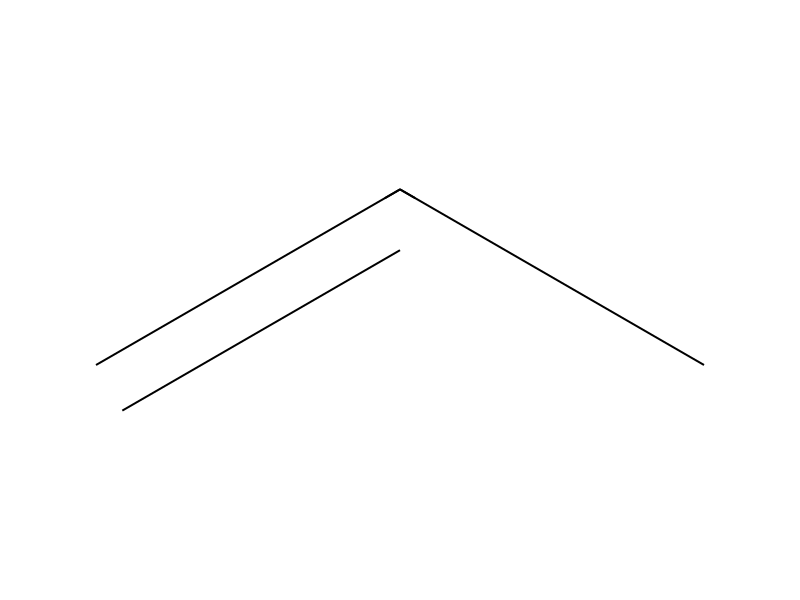

Product 3

Reagents, catalysts & solvents 2


Procedure
After uniformly diluting 14.0 ml of each of catalysts B and G-I obtained in Examples 2, 5 and 6 and Comparative Example 3 with 42.0 ml of silica carrier, it was packed into a reaction tube (SUS316 L, inner diameter: 25 mm). Gas with a gas composition of propylene:oxygen:acetic acid:water in a volume ratio of 29:6:7.1:19:38.9 was introduced at a space velocity of 2070 h−1 with a reaction temperature of 135° C. and a reaction pressure of 0.8 MPaG (gauge pressure), for reaction to obtain allyl acetate from propylene, oxygen and acetic acid.
Workup
- customobtained in Examples 2, 5 and 6 and Comparative Example 3 with 42.0 ml of silica carrier, it
- customwas packed into a reaction tube
- customfor reaction
Sources & evidence
- ORD record
- ord-29fe78e18a7f4b1c93e9f2419ba10209
- Source dataset
- uspto-grants-2012_12
- Patent number
- US08338327B2
Reaction notes
Loading…