Aniline → HCID 44223338, compound
Reaction equation

[NH2:1][C:2]1[CH:7]=[CH:6][CH:5]=[CH:4][CH:3]=1.C[Al](C)C.[F:12][C:13]1[C:34]([NH:35][S:36]([CH2:39][CH2:40][CH3:41])(=[O:38])=[O:37])=[CH:33][CH:32]=[C:31]([F:42])[C:14]=1[C:15]([NH:17][C:18]1[CH:19]=[C:20]2[C:26]([C:27](OC)=[O:28])=[CH:25][NH:24][C:21]2=[N:22][CH:23]=1)=[O:16]>C1(C)C=CC=CC=1>[F:12][C:13]1[C:34]([NH:35][S:36]([CH2:39][CH2:40][CH3:41])(=[O:37])=[O:38])=[CH:33][CH:32]=[C:31]([F:42])[C:14]=1[C:15]([NH:17][C:18]1[CH:19]=[C:20]2[C:26]([C:27]([NH:1][C:2]3[CH:7]=[CH:6][CH:5]=[CH:4][CH:3]=3)=[O:28])=[CH:25][NH:24][C:21]2=[N:22][CH:23]=1)=[O:16]Participants
Reactant 3


Product 1

Reagents, catalysts & solvents 1

Procedure
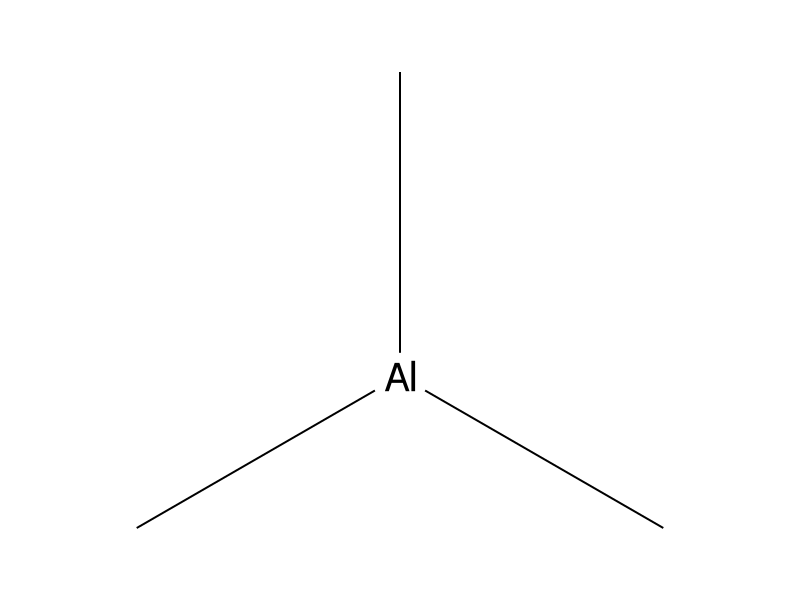
A round bottom flask equipped with a stir bar and nitrogen inlet was charged with aniline (4.2 mg, 0.046 mmol) and dry toluene (0.5 mL) under a nitrogen atmosphere. Trimethyl aluminum (8.0 μL, 0.160 mmol, 7 eq.) was added to this solution, and this mixture was stirred at room temperature for 20 minutes. Methyl 5-(2,6-difluoro-3-(propylsulfonamido)benzamido)-1H-pyrrolo[2,3-b]pyridine-3-carboxylate (13.5 mg, 0.023 mmol, see Example 14) was added in one portion, and the reaction mixture warmed to 90° C. for 30 minutes. The reaction mixture was then allowed to cool to room temperature. The mixture was then quenched carefully with 30% aqueous sodium potassium tartrate and extracted with ethyl acetate (2×). The extracts were dried over sodium sulfate and concentrated under reduced pressure. The resulting residue was dissolved in THF (1 mL), and a 1M aqueous LiOH solution (1 mL) was then added. The mixture was stirred at room temperature for 16 hours, diluted with AcOH/water and extracted with EtOAc (2×). The extracts were washed with saturated sodium bicarbonate solution, dried over sodium sulfate and concentrated. The resulting residue was subjected to preparative TLC purification (2×0.5 mm plates, 10% MeOH/DCM) to afford 5-(2,6-difluoro-3-(propylsulfonamido)benzamido)-N-phenyl-1H-pyrrolo[2,3-b]pyridine-3-carboxamide (4.2 mg, 36%). 1H NMR (400 MHz, DMSO-d6) δ 12.31 (s, 1H), 10.97 (s, 1H), 9.76-9.87 (m 2H), 8.89-8.96 (m, 1H), 8.42-8.55 (m 2H), 7.73-7.80 (m, 2H), 7.51-7.59 (m, 1H), 7.20-7.38 (m, 3H), 7.03-7.11 (m, 1H), 3.06-3.14 (m, 2H), 1.71-1.82 (m, 2H), 0.94-1.04 (m, 3H); m/z (APCI-neg) M−1=512.1; (APCI-pos) M+1=514.0.
Workup
- customA round bottom flask equipped with a stir bar and nitrogen inlet
- temperaturethe reaction mixture warmed to 90° C. for 30 minutes
- temperatureto cool to room temperature
- customThe mixture was then quenched carefully with 30% aqueous sodium potassium tartrate
- extractionextracted with ethyl acetate (2×)
- dry with materialThe extracts were dried over sodium sulfate
- concentrationconcentrated under reduced pressure
- dissolutionThe resulting residue was dissolved in THF (1 mL)
- additiona 1M aqueous LiOH solution (1 mL) was then added
- stirringThe mixture was stirred at room temperature for 16 hours
- additiondiluted with AcOH/water
- extractionextracted with EtOAc (2×)
- washThe extracts were washed with saturated sodium bicarbonate solution
- dry with materialdried over sodium sulfate
- concentrationconcentrated
- customThe resulting residue was subjected to preparative TLC purification (2×0.5 mm plates, 10% MeOH/DCM)
Sources & evidence
- ORD record
- ord-c0aec2abec4d443a9406101cad44e991
- Source dataset
- uspto-grants-2012_12
- Patent number
- US08338452B2
Reaction notes
Loading…