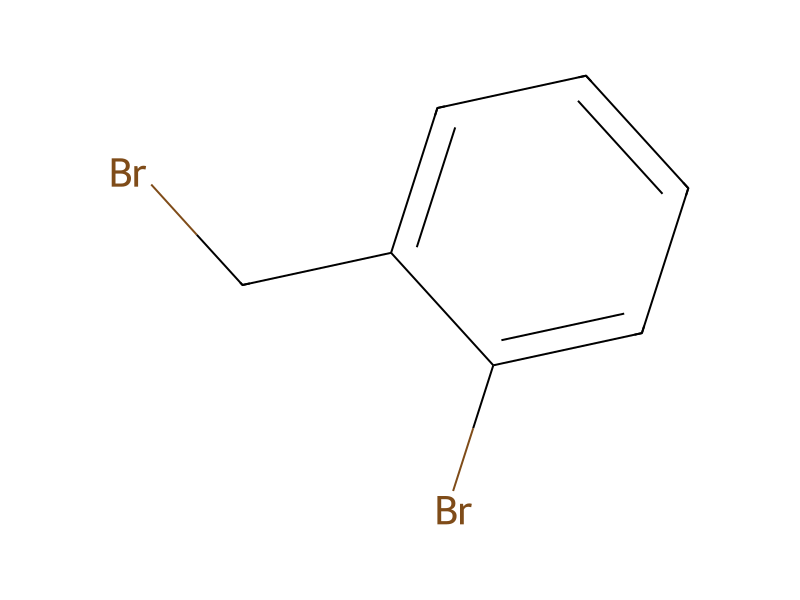
2-Bromobenzyl bromide → Ethyl 4-(4-(2-Bromobenzyl)piperazin-1-yl)benzoate
Reaction equation

[N:1]1([C:7]2[CH:17]=[CH:16][C:10]([C:11]([O:13][CH2:14][CH3:15])=[O:12])=[CH:9][CH:8]=2)[CH2:6][CH2:5][NH:4][CH2:3][CH2:2]1.[Br:18][C:19]1[CH:26]=[CH:25][CH:24]=[CH:23][C:20]=1[CH2:21]Br.C(N(C(C)C)CC)(C)C>C(#N)C>[Br:18][C:19]1[CH:26]=[CH:25][CH:24]=[CH:23][C:20]=1[CH2:21][N:4]1[CH2:3][CH2:2][N:1]([C:7]2[CH:8]=[CH:9][C:10]([C:11]([O:13][CH2:14][CH3:15])=[O:12])=[CH:16][CH:17]=2)[CH2:6][CH2:5]1Participants
5
Reactant 3


Product 1

Reagents, catalysts & solvents 1

Procedure
A solution of EXAMPLE 4A (23.43 g, 100.0 mmol), 2-bromobenzyl bromide (26.24 g, 105.0 mmol) and diisopropylethylamine (20.94 mL, 120.0 mmol) in acetonitrile (200 mL) was stirred at room temperature for two hours. The resulting precipitate was collected by filtration to give the desired product, which was used without further purification.
Workup
- filtrationThe resulting precipitate was collected by filtration
Sources & evidence
- ORD record
- ord-d4b7c9e8711c43eb99310a13740c211e
- Source dataset
- uspto-grants-2012_12
- Patent number
- US08338466B2
Reaction notes
Loading…