Diphenylmethane diisocyanate → Trimethylolpropane
Reaction equation

C1C(CC2C=CC(N=C=O)=CC=2)=CC=C(N=C=O)C=1.[N-]=[C:21]=[O:22].[N-]=[C:24]=[O:25].[O:26]=[C:27]1CC(C)(C)[CH2:30][C:29](C)=[CH:28]1>>[CH2:27]([C:28]([CH2:21][OH:22])([CH2:24][OH:25])[CH2:29][CH3:30])[OH:26]Participants


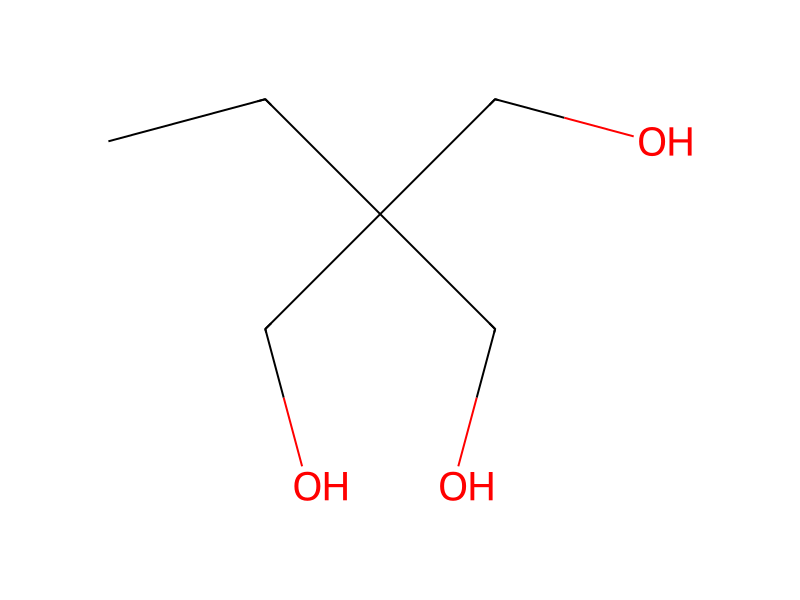
Conditions
- Temperature
- 80 °C
Procedure
8.25 val of 4,4'-diphenylmethane-diisocyanate, which contains its own dimers and trimers (Isonate 143 L), are introduced into a reactor together with 2.5 val of isophorone-diisocyanate and then heated to an internal temperature of 80° C. while stirring and leading in nitrogen to provide an inert atmosphere, the reaction continuing until a clear solution is present. In the meantime, in a second reactor, a solution of 0.9 val of castor oil and 1.3 val of trimethylolpropane is produced within about 1 hour at 90° C. The trimethylolpropane/castor oil solution after cooling to 70° C. is then added over a one hour period to the isocyanate solution preheated to 80° C. The temperature which increases as a result of the exothermic reaction may reach a maximum of 100° C. However, the reaction temperature should be regulated by cooling so as not to exceed 90° C. The reaction mixture is caused to react for a period of 2 hours, up until the mixture has reached an isocyanate content of 19.3 to 19.7 percent by weight.
Workup
- customto provide an inert atmosphere
Sources & evidence
- ORD record
- ord-a69b366eb62240949815e6ded1eabd6f
- Source dataset
- uspto-grants-1982_11
- Patent number
- US04359359
Reaction notes
Loading…