2,4-Dichlorophenol → 1-(2,4-Dichlorophenoxy)-3,3-dimethyl-4-fluoro-2-butanone
Reaction equation

Br[CH2:2][C:3](=[O:9])[C:4]([CH3:8])([CH3:7])[CH2:5][F:6].[Cl:10][C:11]1[CH:16]=[C:15]([Cl:17])[CH:14]=[CH:13][C:12]=1[OH:18].C(=O)([O-])[O-].[K+].[K+]>CC(C)=O>[Cl:10][C:11]1[CH:16]=[C:15]([Cl:17])[CH:14]=[CH:13][C:12]=1[O:18][CH2:2][C:3](=[O:9])[C:4]([CH3:8])([CH3:7])[CH2:5][F:6]Participants
5
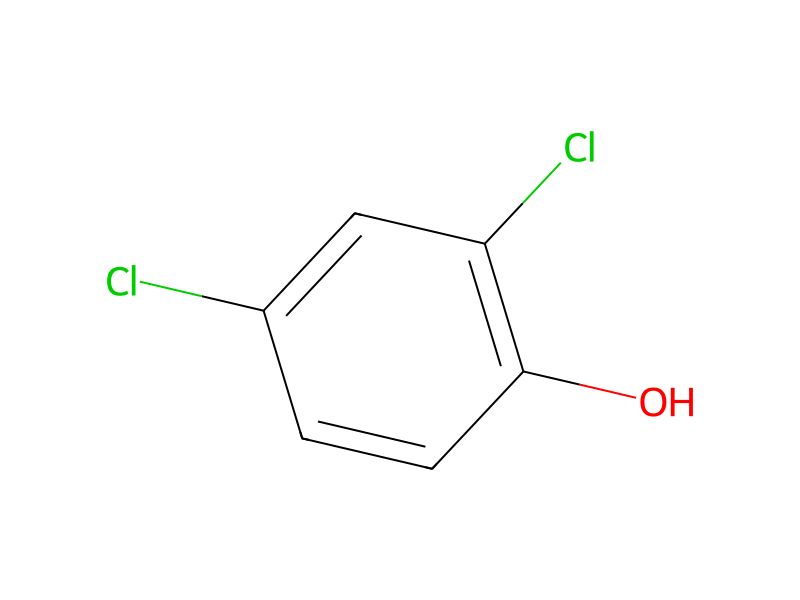




Conditions
- Temperature
- 20 °C
Procedure
157 g (0.79 mol) of 1-bromo-3,3-dimethyl-4-fluoro-2-butanone were added dropwise to a stirred mixture of 129 g (0.79 mol) of 2,4-dichlorophenol and 110 g (0.79 mol) of powdered potassium carbonate in 500 ml of acetone at 20° to 30° C., while cooling. The mixture was subsequently stirred at 20° C. for 2 hours, the inorganic salt was filtered off and the filtrate was concentrated. 199.3 g (90% of theory) of 1-(2,4-dichlorophenoxy)-3,3-dimethyl-4-fluoro-2-butanone were obtained as an oil, which was further reacted directly. ##STR82##
Workup
- temperaturewhile cooling
- filtrationthe inorganic salt was filtered off
- concentrationthe filtrate was concentrated
Sources & evidence
- ORD record
- ord-0d3ec7a5f5f241018322490d7769aa64
- Source dataset
- uspto-grants-1982_11
- Patent number
- US04359470
Reaction notes
Loading…