1,2,3,4-Tetrahydroquinoline → Ethyl 7-bromo-3-(3-(3,4-dihydroquinolin-1(2h)-yl)propyl)-1h-indole-2-carboxylate
Reaction equation

[Br:1][C:2]1[CH:3]=[CH:4][CH:5]=[C:6]2[C:10]=1[NH:9][C:8]([C:11]([O:13][CH2:14][CH3:15])=[O:12])=[C:7]2[CH2:16][CH2:17][CH:18]=O.[NH:20]1[C:29]2[C:24](=[CH:25][CH:26]=[CH:27][CH:28]=2)[CH2:23][CH2:22][CH2:21]1.C([O-])(=O)C.[Na+]>ClC(Cl)C.C(OCC)(=O)C>[Br:1][C:2]1[CH:3]=[CH:4][CH:5]=[C:6]2[C:10]=1[NH:9][C:8]([C:11]([O:13][CH2:14][CH3:15])=[O:12])=[C:7]2[CH2:16][CH2:17][CH2:18][N:20]1[C:29]2[C:24](=[CH:25][CH:26]=[CH:27][CH:28]=2)[CH2:23][CH2:22][CH2:21]1Participants
6
Reactant 3
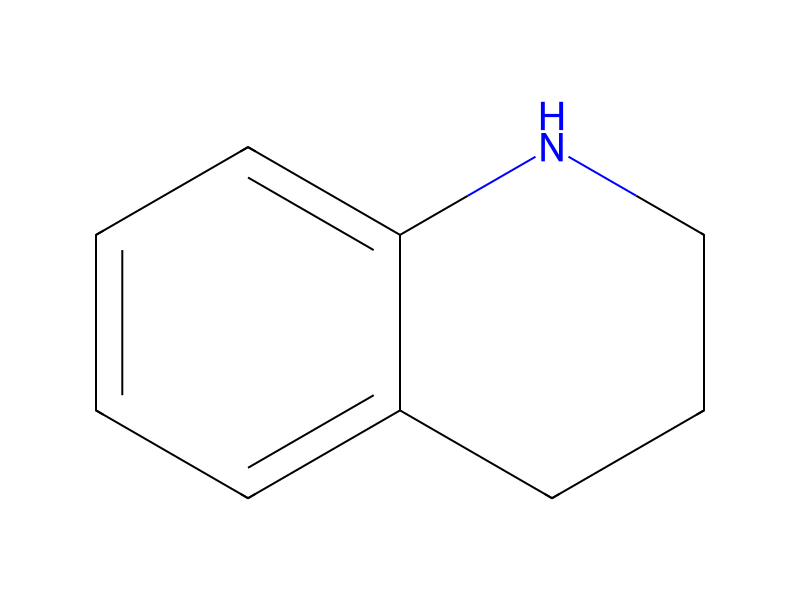


Product 1

Reagents, catalysts & solvents 2


Procedure
To a mixture of EXAMPLE 103A (325 mg) and 1,2,3,4-tetrahydroquinoline (160 mg) in dichloroethane (10 mL) was added sodium acetate (310 mg). The mixture was stirred at ambient temperature overnight, diluted with ethyl acetate (200 mL) and washed with 1N NaOH, water, and brine. After drying over sodium sulfate and concentration, the concentrate was loaded on a silica gel cartridge and eluted with 5% ethyl acetate in hexane.
Workup
- washwashed with 1N NaOH, water, and brine
- dry with materialAfter drying over sodium sulfate and concentration
- washeluted with 5% ethyl acetate in hexane
Sources & evidence
- ORD record
- ord-689e4d24cb444e948bca2b5a5f07f766
- Source dataset
- uspto-grants-2016_06
- Patent number
- US09359296B2
Reaction notes
Loading…