Cesium carbonate → 3-Cyclopropylaniline
Reaction equation

Br[C:2]1[CH:3]=[C:4]([CH:6]=[CH:7][CH:8]=1)[NH2:5].[CH:9]1(B(O)O)[CH2:11][CH2:10]1.C(=O)([O-])[O-].[Cs+].[Cs+]>O1CCOCC1.O.C1C=CC([P]([Pd]([P](C2C=CC=CC=2)(C2C=CC=CC=2)C2C=CC=CC=2)([P](C2C=CC=CC=2)(C2C=CC=CC=2)C2C=CC=CC=2)[P](C2C=CC=CC=2)(C2C=CC=CC=2)C2C=CC=CC=2)(C2C=CC=CC=2)C2C=CC=CC=2)=CC=1>[CH:9]1([C:2]2[CH:3]=[C:4]([CH:6]=[CH:7][CH:8]=2)[NH2:5])[CH2:11][CH2:10]1Participants
7






Procedure
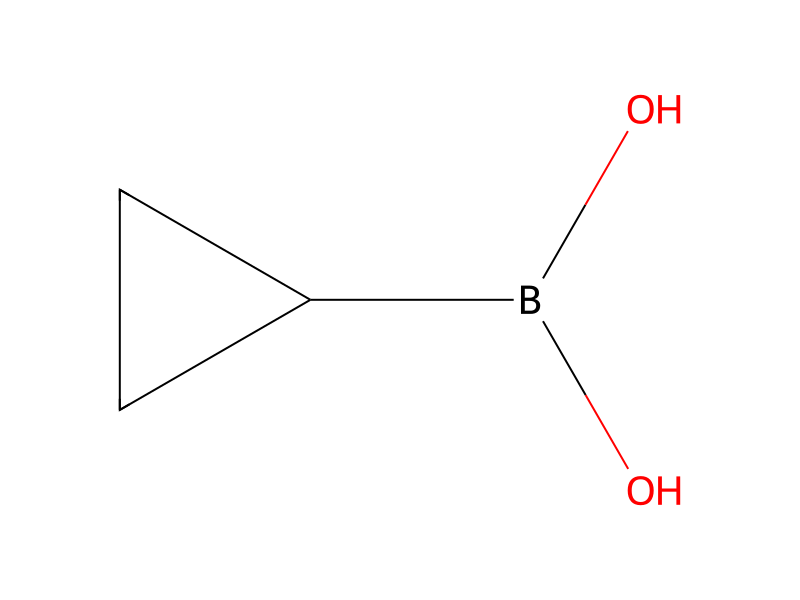
Stir the mixture of 3-bromoaniline (400 mg, 2.35 mmol), cyclopropylboronic acid (240 mg, 2.79 mmol), tetrakis(triphenylphosphine)palladium(0) (140 mg, 0.12 mmol), cesium carbonate (1.5 g, 4.60 mmol) in dioxane (5 mL) and water (0.3 mL) under nitrogen atmosphere for 17 hrs at 100° C. Cool the reaction to room temperature, filter and concentrate the filtrate under reduced pressure. Purify by flash chromatography (silica gel, EtOAc:PE=3:7) to afford the title compound (120 mg, 38.8%). MS: (M+1): 134.0.
Workup
- temperatureCool
- customthe reaction to room temperature
- filtrationfilter
- concentrationconcentrate the filtrate under reduced pressure
- customPurify by flash chromatography (silica gel, EtOAc:PE=3:7)
Sources & evidence
- ORD record
- ord-5c2c5f09888e4767813df027867b7133
- Source dataset
- uspto-grants-2016_06
- Patent number
- US09359338B2
Reaction notes
Loading…