Pyridine → HCID 13412531, compound
Reaction equation

[Cl:1][C:2]1[CH:8]=[CH:7][C:5]([NH2:6])=[CH:4][C:3]=1[C:9]([F:12])([F:11])[F:10].N1C=CC=CC=1.Cl[C:20]([O:22][C:23]1[CH:28]=[CH:27][CH:26]=[CH:25][CH:24]=1)=[O:21].CCOC(C)=O>C(Cl)Cl>[Cl:1][C:2]1[CH:8]=[CH:7][C:5]([NH:6][C:20](=[O:21])[O:22][C:23]2[CH:28]=[CH:27][CH:26]=[CH:25][CH:24]=2)=[CH:4][C:3]=1[C:9]([F:10])([F:11])[F:12]Participants
6
Reactant 4


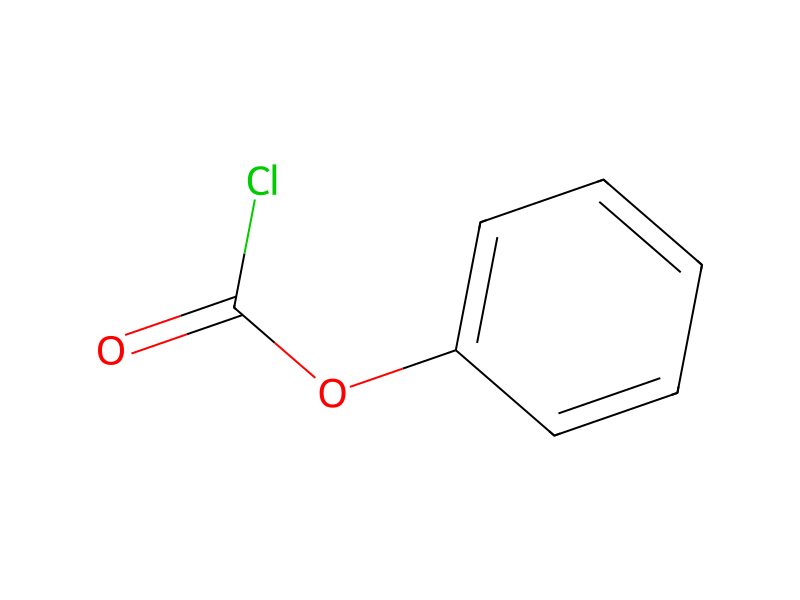

Product 1

Reagents, catalysts & solvents 1

Conditions
- Temperature
- 0 °C
Procedure
Add 4-chloro-3-(trifluoromethyl)aniline (1.0 g, 5.1 mmol) and pyridine (1.0 g, 12.8 mmol) in DCM (10 mL), stir well and cool to 0° C. Add phenyl chloroformate (1.04 g, 6.6 mmol) at 0° C. After addition, stir the reaction at room temperature for 1 hr. TLC (EtOAc:PE=1:2) shows the reaction is complete. Wash the organic layer with 1M HCl solution (20 mL) and brine (20 mL) respectively. Dry over anhydrous Na2SO4; concentrate under reduced pressure to give the target compound (1.16 g) which is used without further purification. MS: (M+1): 316.1.
Workup
- customat 0° C
- additionAfter addition
- stirringstir
- customthe reaction at room temperature for 1 hr
- washWash the organic layer with 1M HCl solution (20 mL) and brine (20 mL) respectively
- dry with materialDry over anhydrous Na2SO4
- concentrationconcentrate under reduced pressure
Sources & evidence
- ORD record
- ord-bdeaa34988f14202930ab204ab18aa8c
- Source dataset
- uspto-grants-2016_06
- Patent number
- US09359338B2
Reaction notes
Loading…