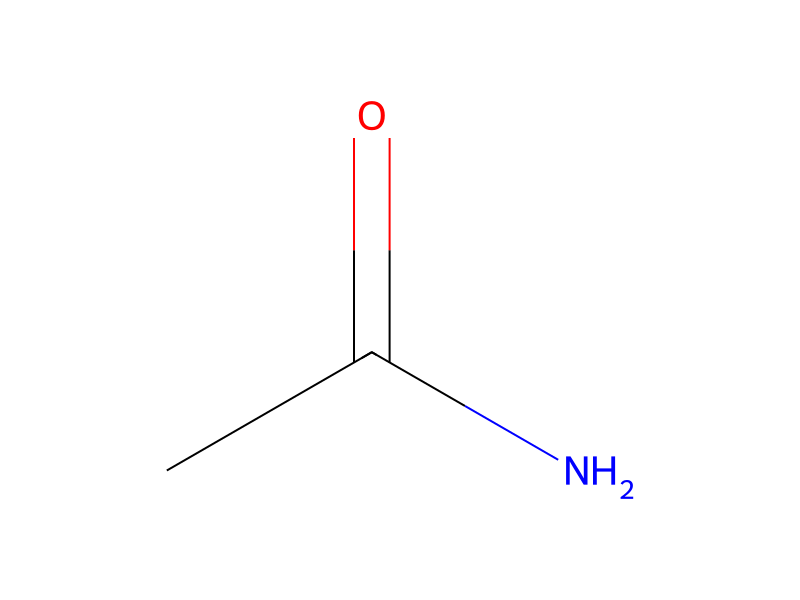
Acetamide → 6-Chloroquinolin-2-amine
Reaction equation

Cl[C:2]1[CH:11]=[CH:10][C:9]2[C:4](=[CH:5][CH:6]=[C:7]([Cl:12])[CH:8]=2)[N:3]=1.C([NH2:16])(=O)C.C([O-])([O-])=O.[K+].[K+]>>[Cl:12][C:7]1[CH:8]=[C:9]2[C:4](=[CH:5][CH:6]=1)[N:3]=[C:2]([NH2:16])[CH:11]=[CH:10]2Participants
4



Conditions
- Temperature
- 200 °C
Procedure
A mixture of 2,6-dichloroquinoline (500 mg, 2.5 mmol), acetamide (3 g, 50.8 mmol) and K2CO3 (1.75 g, 12.7 mmol) in a round bottom flask was stirred at 200° C. for 1.5 hours until TLC indicated that 2,6-dichloroquinoline was consumed. The resulting mixture was cooled to room temperature, and was partitioned between dichloromethane and H2O, the organic layer was dried over anhydrous Na2SO4, concentrated, and the residue was purified by a standard method to give 440 mg of the title compound. LCMS (m/z): 179.7 (M+1)+
Workup
- customwas consumed
- temperatureThe resulting mixture was cooled to room temperature
- customwas partitioned between dichloromethane and H2O
- dry with materialthe organic layer was dried over anhydrous Na2SO4
- concentrationconcentrated
- customthe residue was purified by a standard method
Sources & evidence
- ORD record
- ord-3e703f9959024886a7008cd725b67890
- Source dataset
- uspto-grants-2016_06
- Patent number
- US09365545B2
Reaction notes
Loading…