Dimethylformamide → HCID 86709875, compound
Reaction equation

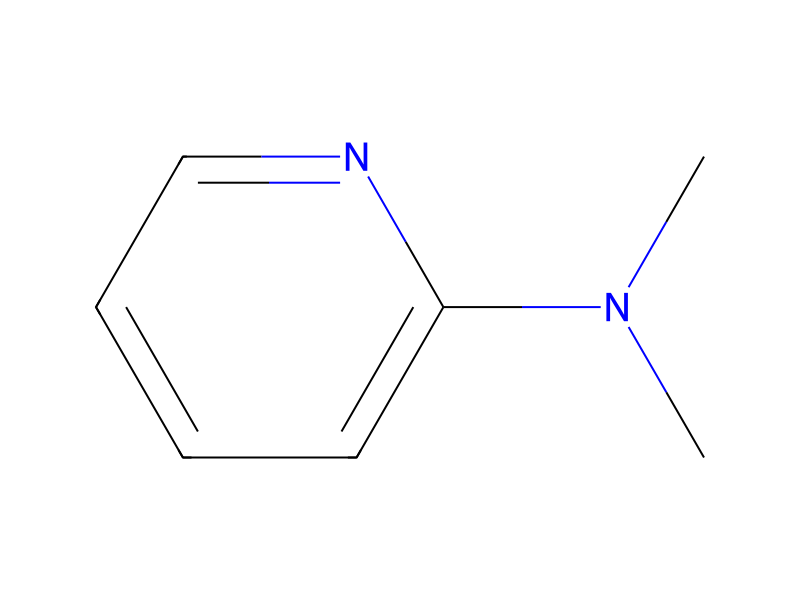
[Cl:1][C:2]1[C:7]([Cl:8])=[C:6]([C:9]2[CH:14]=[CH:13][CH:12]=[CH:11][CH:10]=2)[N:5]=[C:4]([C:15]([OH:17])=O)[CH:3]=1.S(Cl)([Cl:20])=O.CN(C)C=O.CN(C1C=CC=CN=1)C>C1(C)C=CC=CC=1.CO>[Cl:1][C:2]1[C:7]([Cl:8])=[C:6]([C:9]2[CH:14]=[CH:13][CH:12]=[CH:11][CH:10]=2)[N:5]=[C:4]([C:15]([Cl:20])=[O:17])[CH:3]=1Participants






Conditions
- Temperature
- 80 °C
Procedure
To a mixture of 4,5-dichloro-6-phenylpicolinic acid (3.00 g, 11.2 mmol) in toluene (40 mL) was added thionyl chloride (1.22 mL, 16.8 mmol) and dimethylformamide (0.04 mL, 0.6 mmol). Reaction mixture was heated at 80° C. for 3 h. HPLC analysis of an aliquot treated with methanol and dimethylaminopyridine indicated complete conversion of the starting material. Reaction was allowed to cool to room temperature and then concentrated under reduced pressure to provide a white solid. Toluene (40 mL) was added to dissolve the solid and concentrated under reduced pressure and then this process was performed a second time. 4,5-Dichloro-6-phenylpicolinoyl chloride was isolated as a white solid (2.84 g, 89% yield). 1H NMR (400 MHz, CDCl3) δ 8.14 (s, 1H), 7.83-7.75 (m, 2H), 7.55-7.47 (m, 3H). 13C NMR (101 MHz, CDCl3) δ 168.80, 158.88, 146.42, 145.21, 136.79, 134.40, 129.98, 129.61, 128.31, 124.74., LRMS Calcd. C12H6Cl3NO: 284.95. Found: m/z=285 (M+), 250 (M+-Cl), 222, 187, 152., MP. 106-111° C.
Workup
- customReaction mixture
- customReaction
- temperatureto cool to room temperature
- concentrationconcentrated under reduced pressure
- customto provide a white solid
- dissolutionto dissolve the solid
- concentrationconcentrated under reduced pressure
Sources & evidence
- ORD record
- ord-23a1c3343bef47fd8c14b61ca89a8fcc
- Source dataset
- uspto-grants-2016_06
- Patent number
- US09376388B2
Reaction notes
Loading…