Acrylic Acid → 4-Methoxy cinnamic acid
Reaction equation

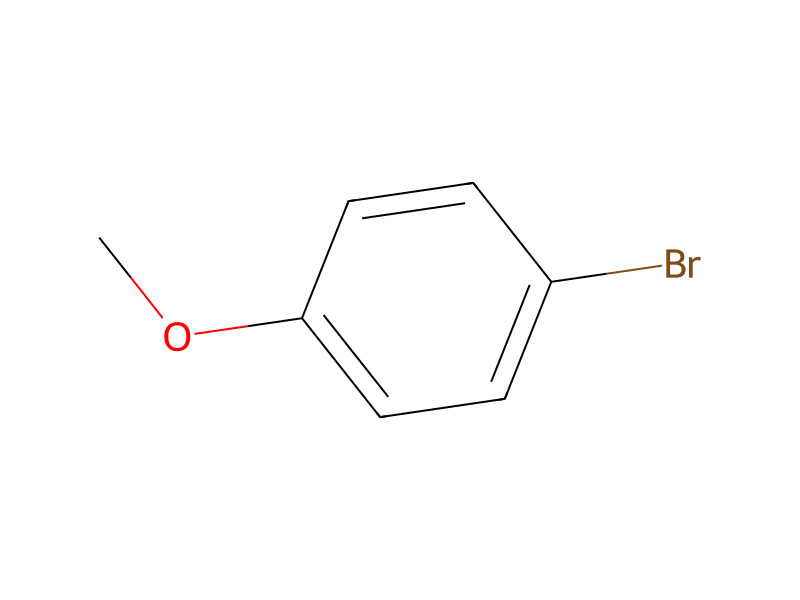
Br[C:2]1[CH:7]=[CH:6][C:5]([O:8][CH3:9])=[CH:4][CH:3]=1.[C:10]([OH:14])(=[O:13])[CH:11]=[CH2:12].C(NCCCC)CCC>[Pd].CN1CCCC1=O>[CH3:9][O:8][C:5]1[CH:6]=[CH:7][C:2]([CH:12]=[CH:11][C:10]([OH:14])=[O:13])=[CH:3][CH:4]=1Participants
6
Reactant 3


Product 1

Reagents, catalysts & solvents 2


Procedure
18.7 g (0.1 mole) p-bromoanisole, 500 mg Pd on carbon (5%), 40 ml N-methylpyrrolidone, 7.57 g (0.105 mole) acrylic acid and 13.57 g (0.105 mole) dibutylamine are stirred under nitrogen at 80° for 1 hour and then at 180° for 4 hours. The catalyst is removed by filtration at 100°. To the filtrate are added 200 ml of 2N sodium hydroxide and the solution is then washed twice with ether. Acidification to pH 1 with 2N hydrochloric acid, followed by filtration furnishes 10 g of p-methoxycinnamic acid (56% yield), top: 167°; no depression with an authentic sample is observed, the NMR data are as in example 8.
Workup
- customThe catalyst is removed by filtration at 100°
- additionTo the filtrate are added 200 ml of 2N sodium hydroxide
- washthe solution is then washed twice with ether
- filtrationAcidification to pH 1 with 2N hydrochloric acid, followed by filtration
Sources & evidence
- ORD record
- ord-93eb992b8ca3454bab6b365b969776fc
- Source dataset
- uspto-grants-1995_10
- Patent number
- US05457226
Reaction notes
Loading…