Ammonium Chloride → 2,6-Dichloro-3-pyridylamine
Reaction equation

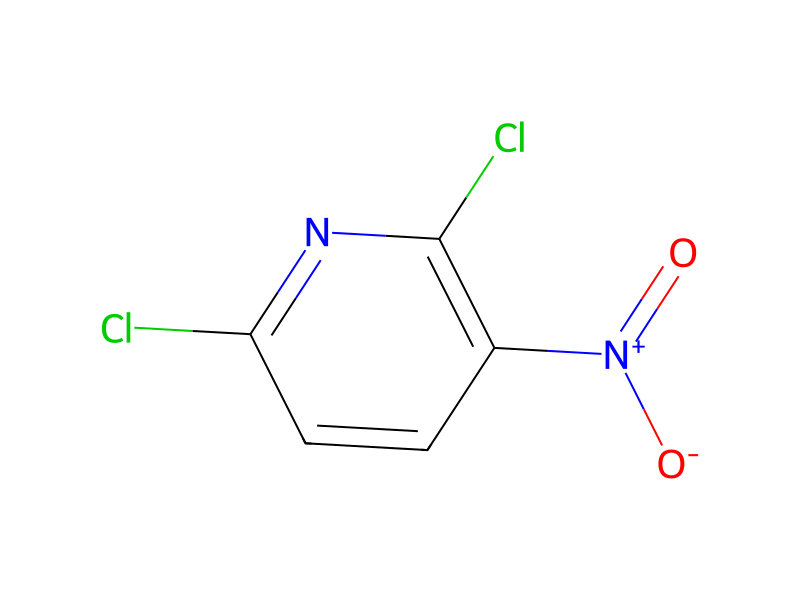
[Cl:1][C:2]1[C:7]([N+:8]([O-])=O)=[CH:6][CH:5]=[C:4]([Cl:11])[N:3]=1.[NH4+].[Cl-]>CO.CC(C)=O>[NH2:8][C:7]1[C:2]([Cl:1])=[N:3][C:4]([Cl:11])=[CH:5][CH:6]=1Participants
4
Reactant 2

Product 1

Reagents, catalysts & solvents 1

Procedure
4 g of 2,6-dichloro-3-nitropyridine are added to a suspension of 8 g of reduced iron in 200 cm3 of a water/alcohol (50/50) solution containing 1.6 g of NH4Cl. The suspension is brought to reflux for 1 hour. The insoluble material is then removed by filtration. The filtrate is treated with 0.4 g of Na2SO3 and 0.4 g of NaH2PO2. The solution is adjusted to a pH of 8 and the alcohol is concentrated under reduced pressure until precipitation. The crystals corresponding to 3-amino-2,6- dichloropyridine are collected on a filter, washed with water and dried.
Workup
- temperatureto reflux for 1 hour
- customThe insoluble material is then removed by filtration
- additionThe filtrate is treated with 0.4 g of Na2SO3 and 0.4 g of NaH2PO2
- concentrationthe alcohol is concentrated under reduced pressure until precipitation
- customThe crystals corresponding to 3-amino-2,6- dichloropyridine are collected on a filter
- washwashed with water
- customdried
Sources & evidence
- ORD record
- ord-f865142e0abc458f8cdf751471a28166
- Source dataset
- uspto-grants-1995_10
- Patent number
- US05459138
Reaction notes
Loading…