Hydrochloric Acid → 1-(3,4-dimethoxyphenyl)-4,4,4-trifluorobutane-1,3-dione
Reaction equation

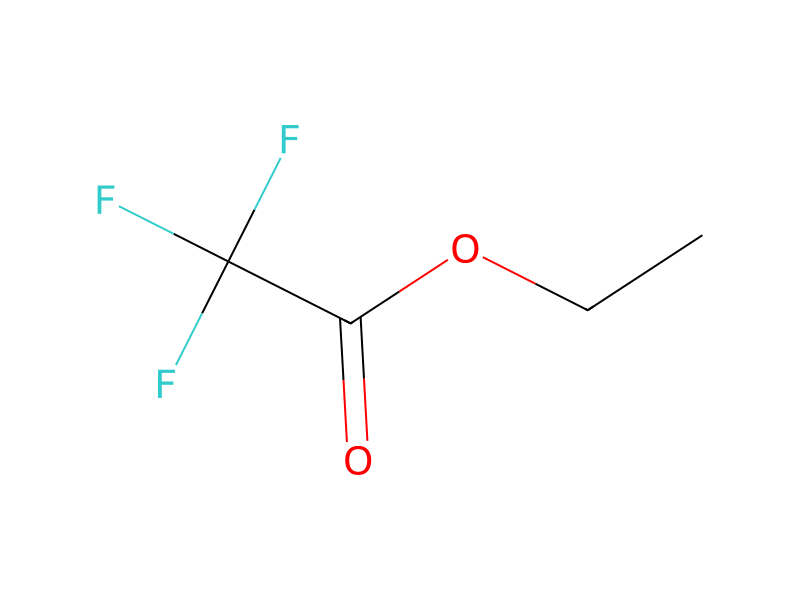
C[O-].[Na+].[F:4][C:5]([F:12])([F:11])[C:6]([O:8]CC)=O.[CH3:13][C:14]([C:16]1[CH:21]=[CH:20][C:19]([O:22][CH3:23])=[C:18]([O:24][CH3:25])[CH:17]=1)=[O:15].Cl>C1(C)C=CC=CC=1.O>[CH3:25][O:24][C:18]1[CH:17]=[C:16]([C:14](=[O:15])[CH2:13][C:6](=[O:8])[C:5]([F:4])([F:11])[F:12])[CH:21]=[CH:20][C:19]=1[O:22][CH3:23]Participants
Reactant 4



Product 1

Reagents, catalysts & solvents 2


Conditions
- Temperature
- 50 °C
Procedure
216 g (4 mol) of anhydrous sodium methylate and 3.5 l of toluene are introduced into a 10 liter round-bottomed flask and, under vigorous stirring, 705 g (5 mol) of ethyl trifluoroacetate are then run in; the temperature rises slowly to 30° C. After cooling in an ice bath, a solution of 720 g (4 mol) of 3,4-dimethoxyacetophenone in 0.5 l of toluene is added dropwise to the reaction mixture; a white precipitate slowly forms. The mixture is next left stirred overnight and then heated to 50° C. for three hours. After cooling, 2 1 of water and 330 ml of concentrated hydrochloric acid are added, the organic phase is separated off after settling has taken place, dried over magnesium sulphate, filtered and evaporated to obtain 1060 g (96%) of a yellow solid melting at 87°-89° C.
Workup
- customrises slowly to 30° C
- temperatureAfter cooling in an ice bath
- waitThe mixture is next left
- temperatureAfter cooling
- customthe organic phase is separated off after settling
- dry with materialdried over magnesium sulphate
- filtrationfiltered
- customevaporated
Sources & evidence
- ORD record
- ord-ced4b3146bce44aeb88c5de9966e7e24
- Source dataset
- uspto-grants-1995_10
- Patent number
- US05459262
Reaction notes
Loading…