Acetyl chloride → Cyclohexyl (S)-3-(3,4-dihydroxyphenyl)-2-hydrazino-2-methylpropanoate
Reaction equation

C(Cl)(=O)C.[CH:5]1(O)[CH2:10][CH2:9][CH2:8][CH2:7][CH2:6]1.[CH3:12][C@@:13]([NH:26][NH2:27])([C:23]([OH:25])=[O:24])[CH2:14][C:15]1[CH:16]=[CH:17][C:18]([OH:22])=[C:19]([OH:21])[CH:20]=1>C(OCC)(=O)C>[OH:21][C:19]1[CH:20]=[C:15]([CH2:14][C@@:13]([NH:26][NH2:27])([CH3:12])[C:23]([O:25][CH:5]2[CH2:10][CH2:9][CH2:8][CH2:7][CH2:6]2)=[O:24])[CH:16]=[CH:17][C:18]=1[OH:22]Participants
5
Reactant 3

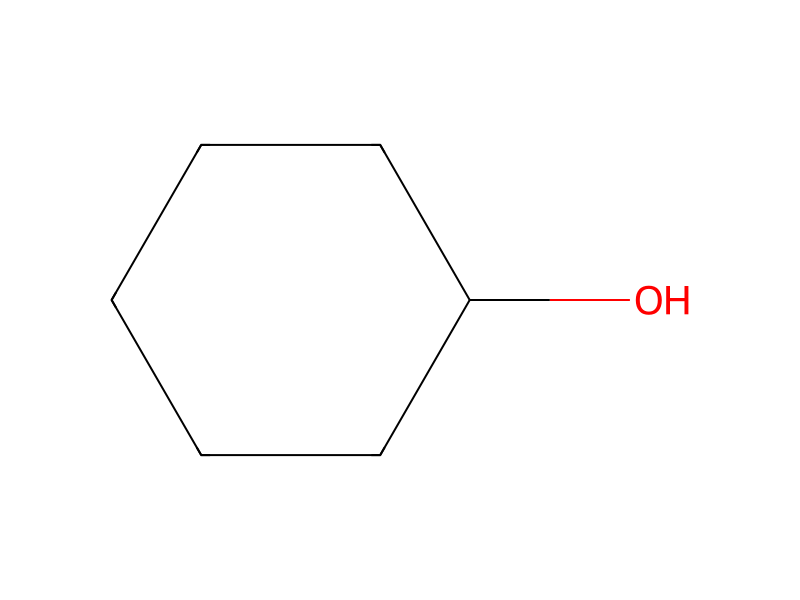

Product 1

Reagents, catalysts & solvents 1

Conditions
- Temperature
- 0 °C
Procedure
Acetyl chloride (1 mL) was slowly added to cyclohexanol (5 mL) at 0° C. After stirring at 0° C. for 10 min, carbidopa (294 mg, 1.5 mmol) was added slowly as solid. The resulting mixture was warmed to 50° C. for 16 h. After cooling to room temperature, ethyl acetate (40 mL) was added and product was extracted with water (4×5 mL), then the aqueous phase was lyophilized to give the crude product. HPLC of the crude product afforded 50 mg of the title compound as an oil. 1H NMR (CD3OD): δ 1.46 (s, 3H), 1.52–1.80 (m, 10H), 2.92 (dd, J=13.6 Hz, 2H,), 4.85 (m, 1H), 6.49 (d, J=7.6 Hz, 1H), 6.59 (s, 1H), 6.68 (d, J=7.6 Hz, 1H). MS (ESI) m/z 309.3 (M+H+).
Workup
- temperatureThe resulting mixture was warmed to 50° C. for 16 h
- temperatureAfter cooling to room temperature
- extractionproduct was extracted with water (4×5 mL)
- customto give the crude product
Sources & evidence
- ORD record
- ord-e04c3f88f0e341cf98c9e0671be78b4f
- Source dataset
- uspto-grants-2006_09
- Patent number
- US07101912B2
Reaction notes
Loading…