2,2'-Dimethylbiphenyl → 6-(4-Methylphenyl)-1,2,3,4-tetrahydronaphthalene
Reaction equation

C1(P(C2CCCCC2)C2CCCCC2)CCCCC1.CCCCCC[CH2:26][CH2:27][CH2:28][CH2:29][CH2:30][CH2:31][CH3:32].CO[C:35]1[CH:36]=[C:37]2[C:42](=[CH:43][CH:44]=1)[CH2:41][CH2:40][CH2:39][CH2:38]2.C1(C)C(C2C(C)=CC=CC=2)=CC=CC=1>>[CH3:32][C:31]1[CH:26]=[CH:27][C:28]([C:35]2[CH:36]=[C:37]3[C:42](=[CH:43][CH:44]=2)[CH2:41][CH2:40][CH2:39][CH2:38]3)=[CH:29][CH:30]=1Participants


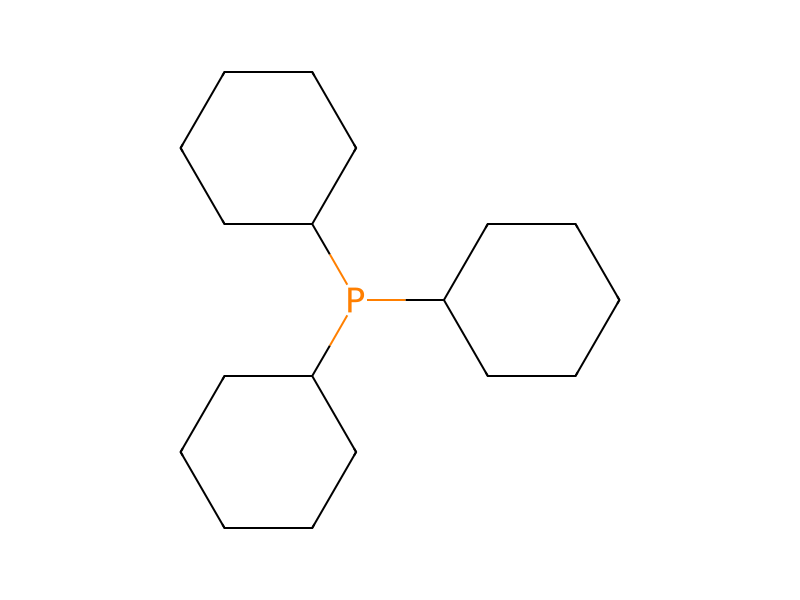

Conditions
- Temperature
- 60 °C
Procedure
In a reaction flask was placed NiCl2(PCy3)2 (61.2 mg, 0.0886 mmol), PCy3 (49.0 mg, 0.175 mmol), tridecane (255 mg, 1.386 mmol, as an internal standard), and 6-methoxy-1,2,3,4-tetrahydronaphthalene (273 mg, 1.683 mmol). The Grignard reagent (1 M in THF, 5.0 mmol) was added to this mixture under a nitrogen atmosphere at room temperature. The resulting solution was warmed to 60° C. for 15 hours. A sample was withdrawn and quenched with an aqueous sodium citrate solution (1 M). The aqueous solution was extracted with ethyl acetate. GC analysis of the organic phase showed the presence of 6-(4-methylphenyl)-1,2,3,4-tetrahydronaphthalene (1.272 mmol, 76% yield), bitoluene (0.50 mmol), and 6-methoxy-1,2,3,4-tetrahydronaphthalene (0.357 mmol) in the reaction mixture.
Workup
- customIn a reaction flask was placed
- customA sample was withdrawn
- customquenched with an aqueous sodium citrate solution (1 M)
- extractionThe aqueous solution was extracted with ethyl acetate
Sources & evidence
- ORD record
- ord-af48ed315224466f8b02ca7dc677fbb7
- Source dataset
- uspto-grants-2006_09
- Patent number
- US07105467B2
Reaction notes
Loading…