Isoprene → HCID 19842620, compound
Reaction equation

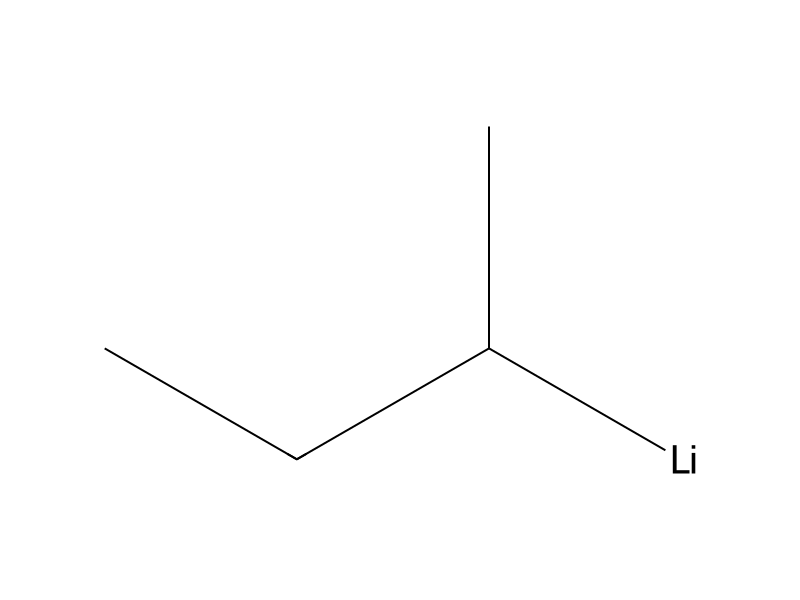
C([Li])(CC)C.[CH2:6]=[CH:7][C:8]1[CH:13]=[CH:12][CH:11]=[CH:10][CH:9]=1.O1CCCC1.[CH2:19]=[CH:20][C:21](=[CH2:23])[CH3:22]>C1CCCCC1>[CH2:6]=[CH:7][C:8]1[CH:13]=[CH:12][CH:11]=[CH:10][CH:9]=1.[CH2:19]=[CH:20][C:21](=[CH2:22])[CH3:23].[CH2:6]=[CH:7][C:8]1[CH:13]=[CH:12][CH:11]=[CH:10][CH:9]=1Participants
Reactant 4



Product 1

Reagents, catalysts & solvents 1

Procedure
In a 200 L pressure-resistant vessel filled with dry nitrogen, 75 kg of cyclohexane as a solvent and 21 g of sec-butyllithium as a polymerization initiator were added and, subsequently, 1.7 kg of styrene was added. After polymerization at 50° C., 0.59 kg of tetrahydrofuran as a Lewis base was added and, subsequently, 17.3 kg of isoprene and 1.7 kg of styrene were added in this order. When polymerization was carried out, a triblock copolymer of styrene-isoprene-styrene type was obtained. The block copolymer had a branching degree (α) of 0.335. The block copolymer obtained was subjected to hydrogenation at a hydrogen pressure of 2 MPa and a reaction temperature of 100° C. in cyclohexane using Pd/C as a catalyst, yielding a styrene-hydrogenated isoprene-styrene block copolymer (SEPS). The resulting block copolymer had a weight average molecular weight of 83000, a styrene content of 16% by weight, and a ratio of hydrogenation of 92 mol %.
Workup
- customAfter polymerization at 50° C.
- customWhen polymerization
Sources & evidence
- ORD record
- ord-c6f53d3709084987ba8052217502bc74
- Source dataset
- uspto-grants-2006_09
- Patent number
- US07109272B2
Reaction notes
Loading…