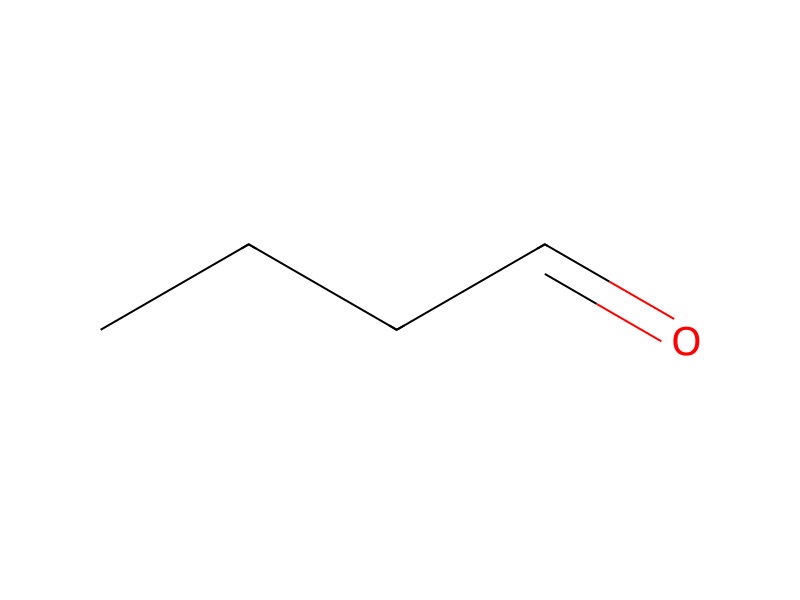
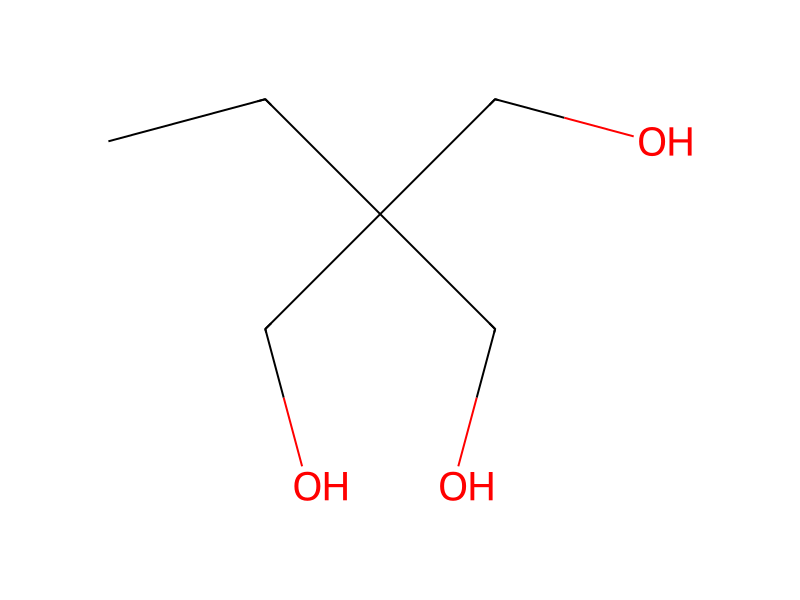
Butanal → Trimethylolpropane
Reaction equation

C(=O)CCC.C=O.[CH2:8]([C:10]([CH2:15][OH:16])([CH2:13][CH3:14])[CH:11]=[O:12])[OH:9]>C(O)=O>[CH2:8]([C:10]([CH2:15][OH:16])([CH2:11][OH:12])[CH2:13][CH3:14])[OH:9]Participants
5
Reactant 3


Product 1
Reagents, catalysts & solvents 1

Procedure
In the Cannizzaro process, butyraldehyde is reacted with formaldehyde in the presence of a stoichiometric amount of base. This initially forms 2,2-dimethylolbutanal which then reacts with a further molecule of formaldehyde in a cross-Cannizzaro reaction to form formic acid and trimethylolpropane. The disadvantage of this method is that one molar equivalent of formate is formed as coproduct. This has to be worked up and increases the consumption of formaldehyde.
Sources & evidence
- ORD record
- ord-6aa0d5f8ece7413e94ed676c01255609
- Source dataset
- uspto-grants-2006_09
- Patent number
- US07112707B2
Reaction notes
Loading…