Diisopropylethylamine → Isohexane ethyl acetate
Reaction equation

BrC1N=[C:4]([O:18]C)[C:5](NS(C2S[C:14](Cl)=[CH:15][CH:16]=2)(=O)=O)=NC=1.C(N([CH:26]([CH3:28])[CH3:27])CC)(C)C.ClC[O:31]CC[Si](C)(C)C>ClCCl>[C:4]([O:18][CH2:26][CH3:28])(=[O:31])[CH3:5].[CH3:14][CH2:15][CH2:16][CH:26]([CH3:27])[CH3:28]Participants
5

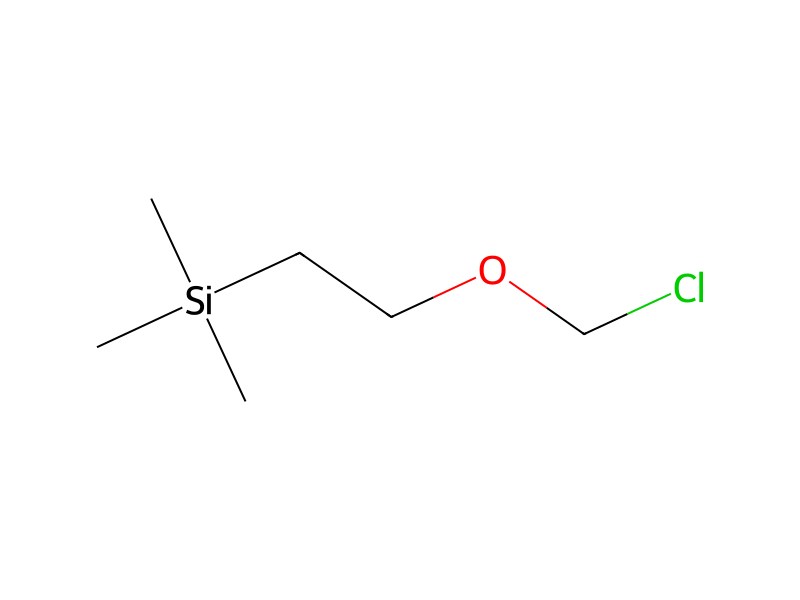



Procedure
A mixture N-(5-Bromo-3-methoxy-2-pyrazinyl)-5-chloro-2-thiophenesulphonamide (Example 1) (0.40 g), diisopropylethylamine (0.26 g) and [2-(chloromethoxy)ethyl]trimethylsilane (0.25 g) in dichloromethane (50 mL) was stirred at room temperature. After 2 h, the solution was washed with water, dried (MgSO4) and evaporated. Chromatography on silica gel eluting with ethyl acetate/isohexane mixtures gave the title compounds a white solid (0.40 g).
Workup
- washthe solution was washed with water
- dry with materialdried (MgSO4)
- customevaporated
Sources & evidence
- ORD record
- ord-81affa6d75bf4397b4a55b36708a8a31
- Source dataset
- uspto-grants-2008_08
- Patent number
- US07410972B2
Reaction notes
Loading…