Acetic Acid → 6-Chloro-7-(2,3-dihydro-1H-indol-1-yl)-2-{4-[2-(4-morpholinyl)ethoxy]phenyl}-1H-imidazo[4,5-b]pyridine
Reaction equation

[Cl:1][C:2]1[C:3](Cl)=[C:4]2[N:10]=[C:9]([C:11]3[CH:16]=[CH:15][C:14]([O:17][CH2:18][CH2:19][N:20]4[CH2:25][CH2:24][O:23][CH2:22][CH2:21]4)=[CH:13][CH:12]=3)[NH:8][C:5]2=[N:6][CH:7]=1.[NH:27]1[C:35]2[C:30](=[CH:31][CH:32]=[CH:33][CH:34]=2)[CH2:29][CH2:28]1.O.C(O)(=O)C>C1(C)C(C)=CC=CC=1>[Cl:1][C:2]1[C:3]([N:27]2[C:35]3[C:30](=[CH:31][CH:32]=[CH:33][CH:34]=3)[CH2:29][CH2:28]2)=[C:4]2[NH:10][C:9]([C:11]3[CH:16]=[CH:15][C:14]([O:17][CH2:18][CH2:19][N:20]4[CH2:25][CH2:24][O:23][CH2:22][CH2:21]4)=[CH:13][CH:12]=3)=[N:8][C:5]2=[N:6][CH:7]=1Participants


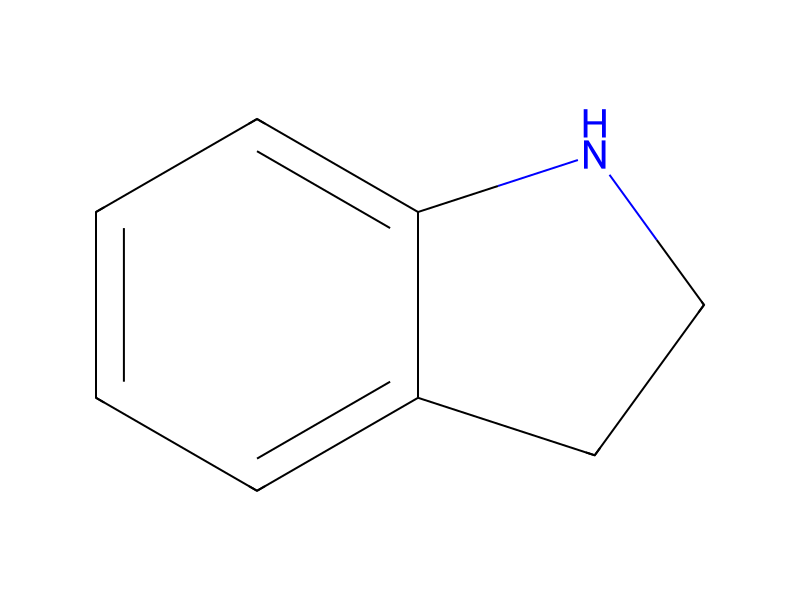



Conditions
- Temperature
- 180 °C
Procedure
6,7-Dichloro-2-[4-(2-morpholin-4-ylethoxy)phenyl]-3H-imidazo[4,5-b]pyridine (Example 206) (30 mg 76 μmol) and indoline (0.10 ml, 790 μmol) were mixed in xylene (mixture of isomers, 0.75 ml) and heated in a microwave oven at 180° C. for 20 min. When cool again, water (0.75 ml) and acetic acid (0.75 ml) were added to the mixture, causing separation of two phases. The aqueous phase was separated and subjected to semi-preparative HPLC-C18. The appropriate fractions were pooled and evaporated in vacuo. The yellow oily residue was dissolved in EtOAc (20 ml). This solution was washed with 1% aqueous NaHCO3 (20 ml) and brine (10 ml). The organic phase was dried (MgSO4) and evaporated in vacuo to afford the pure product (31 mg, 85%) as a pale yellow powder.
Workup
- temperatureWhen cool again
- customseparation of two phases
- customThe aqueous phase was separated
- customevaporated in vacuo
- dissolutionThe yellow oily residue was dissolved in EtOAc (20 ml)
- washThis solution was washed with 1% aqueous NaHCO3 (20 ml) and brine (10 ml)
- dry with materialThe organic phase was dried (MgSO4)
- customevaporated in vacuo
Sources & evidence
- ORD record
- ord-bf893aedb1344c21b2f514db937d9def
- Source dataset
- uspto-grants-2008_08
- Patent number
- US07410966B2
Reaction notes
Loading…