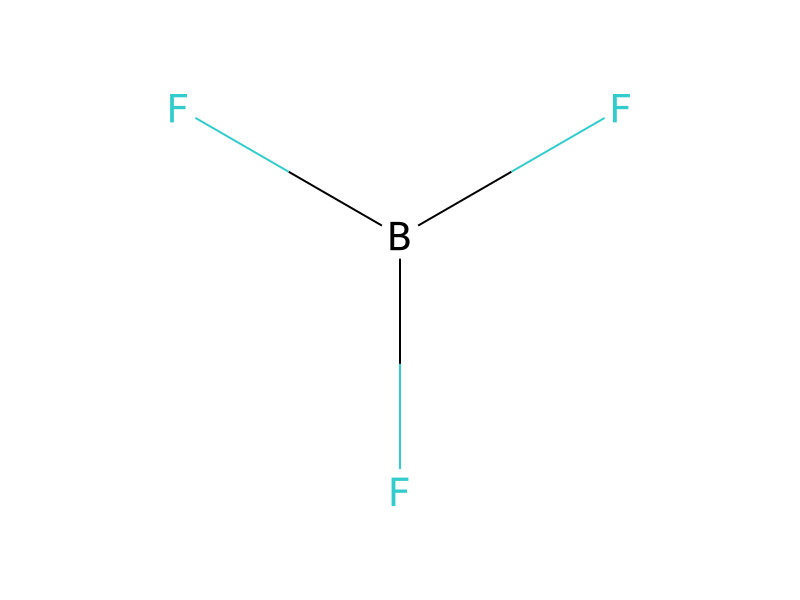
Boron trifluoride → HCID 12241075, compound
Reaction equation

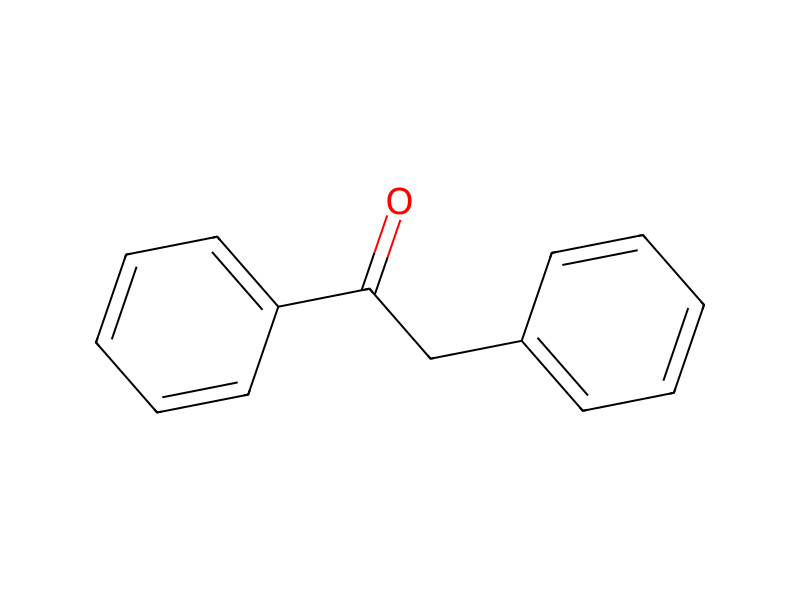
B(F)(F)F.[OH:5][C:6]1[CH:15]=[C:14]2[C:9]([C:10](=[O:22])[C:11]([C:16]3[CH:21]=[CH:20][CH:19]=[CH:18][CH:17]=3)=[CH:12][O:13]2)=[CH:8][CH:7]=1.C(C(C1C=[CH:36][C:35]([OH:38])=CC=1O)=O)C1C=CC=CC=1.C1([C:46](CC2C=CC=CC=2)=[O:47])C=CC=CC=1>>[OH:5][C:6]1[CH:15]=[C:14]2[C:9]([C:10](=[O:22])[C:11]([C:16]3[CH:21]=[CH:20][CH:19]=[CH:18][CH:17]=3)=[C:12]([C:46]([O:38][CH2:35][CH3:36])=[O:47])[O:13]2)=[CH:8][CH:7]=1Participants


Procedure
Deoxybenzoins undergo α-keto formylation, intramolecular acetal formation, and a facile dehydration to give the pyrone ring C and hence, the isoflavones as shown in Scheme 1, Step 2 and below. Substituted deoxybenzoins were synthesized by reacting appropriate substituted phenyl acetic acids with properly substituted resorcinols in the presence of BF3. The starting material (7-hydroxy isoflavone, compound 1) for the synthesis of the 7-O-substituted isoflavones was prepared by cyclization of 2,4-dihydroxyphenyl benzyl ketone (Aldrich Chemical Co. Milwaukee, Wis.) as described by WO 91/15483, and shown in steps 2 and 3 of scheme 1, and further described in Gao et al. (2003) Bioorganic & Medicinal Chemistry, in press. 7-Hydroxy-2-ethoxycarbonylisoflavone (compound 20) was prepared by cyclization of the corresponding deoxybenzoin in the presence of an appropriate formyl equivalent as shown in Li, D. Y.; Gao, Z. J.; Ji, Q. E. Synthesis of isoflavones derivatives (I)-7-methoxy-3′-N, N-dialkylaminomethyl-4′-hydroxy isoflavones (Chinese J. Med. Chem. 1991, 1 (2), 38-42). The 2-carboxy derivatives (compounds 16, 21, and 22) were obtained by hydrolyzing their respective ethyl esters. The 4′-amino derivatives (compounds 32 and 33) were prepared by reducing their corresponding 4′-nitro derivatives (compounds 27 and 28) under the condition set forth in WO 91/15483, and Li, D. Y.; Gao, Z. J.; Ji, Q. E. Synthesis of isoflavones derivatives (I)-7-methoxy-3′-N, N-dialkylaminomethyl-4′-hydroxy isoflavones. Chinese J. Med. Chem. 1991, 1 (2), 38-42. Full explanations of the syntheses are set forth below. All compounds synthesized were purified by Sephadex-LH-20 and/or silica gel columns. Products were identified by 1HNMR, 13C-NMR, MS, and elemental analyses. Purity of all compounds prepared in this study was greater than 97.8% as judged by HPLC with UV detection at 254 mn. Molecular weights, melting points, molecular formulae, and elemental analysis data of these analogs are included in EXAMPLE IV, below.
Workup
- customwere obtained
- customwere prepared
- customAll compounds synthesized
- customwere purified by Sephadex-
- customPurity of all compounds prepared in this study
Sources & evidence
- ORD record
- ord-3dd0e832b9f9472c9f1004651b0a5648
- Source dataset
- uspto-grants-2008_05
- Patent number
- US07368434B2
Reaction notes
Loading…