3-Nitrobenzenesulfonyl chloride → HCID 62522906, compound
Reaction equation

[N+:1]([C:4]1[CH:5]=[C:6]([S:10](Cl)(=[O:12])=[O:11])[CH:7]=[CH:8][CH:9]=1)([O-])=O.[NH2:14][C:15]1([CH2:20][OH:21])[CH2:19][CH2:18][CH2:17][CH2:16]1.C(=O)(O)[O-].[Na+]>ClCCl>[NH2:1][C:4]1[CH:5]=[C:6]([S:10]([NH:14][C:15]2([CH2:20][OH:21])[CH2:19][CH2:18][CH2:17][CH2:16]2)(=[O:12])=[O:11])[CH:7]=[CH:8][CH:9]=1Participants
5
Reactant 3

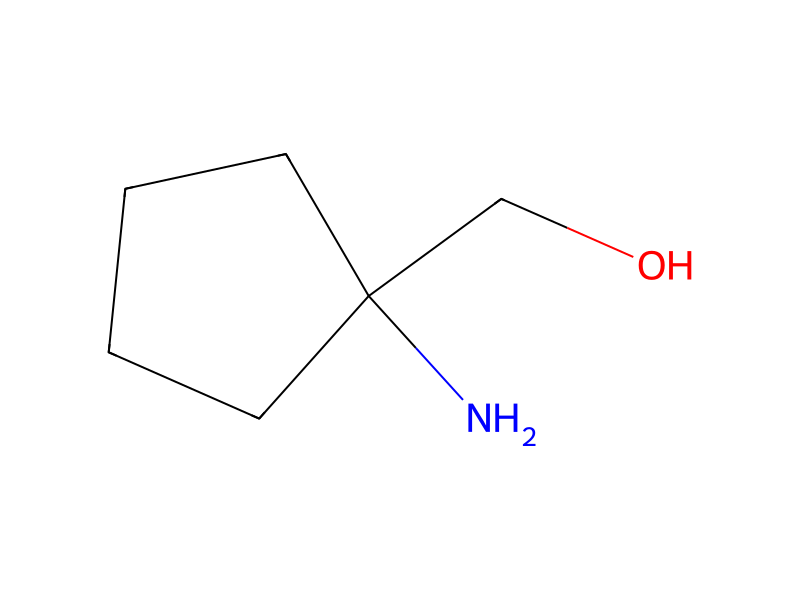

Product 1

Reagents, catalysts & solvents 1

Procedure
A mixture of 3-nitro-benzenesulfonyl chloride (0.89 g, 4 mmol) and (1-amino-cyclopentyl)-methanol (0.46 g, 4 mmol) in dichloromethane (4 mL)/sat. sodium bicarbonate solution (4 mL) was stirred at 20° C. for 20 h. The mixture was diluted with dichloromethane (20 mL). The layers were separated and the organic layer was washed with water, dried (Na2SO4) and evaporated in vacuo. The solid residue was dissolved in ethanol (20 mL) and hydrogenated in the presence of 5% palladium-charcoal (0.2 g) to give the title compound (0.64 g, 59%). Off-white solid. MS (ISP) 271.4 [(M+H)+]; mp 130-132° C.
Workup
- customThe layers were separated
- washthe organic layer was washed with water
- dry with materialdried (Na2SO4)
- customevaporated in vacuo
- dissolutionThe solid residue was dissolved in ethanol (20 mL) and hydrogenated in the presence of 5% palladium-charcoal (0.2 g)
Sources & evidence
- ORD record
- ord-a032a08aa548404da49e65adcb643859
- Source dataset
- uspto-grants-2008_05
- Patent number
- US07378417B2
Reaction notes
Loading…