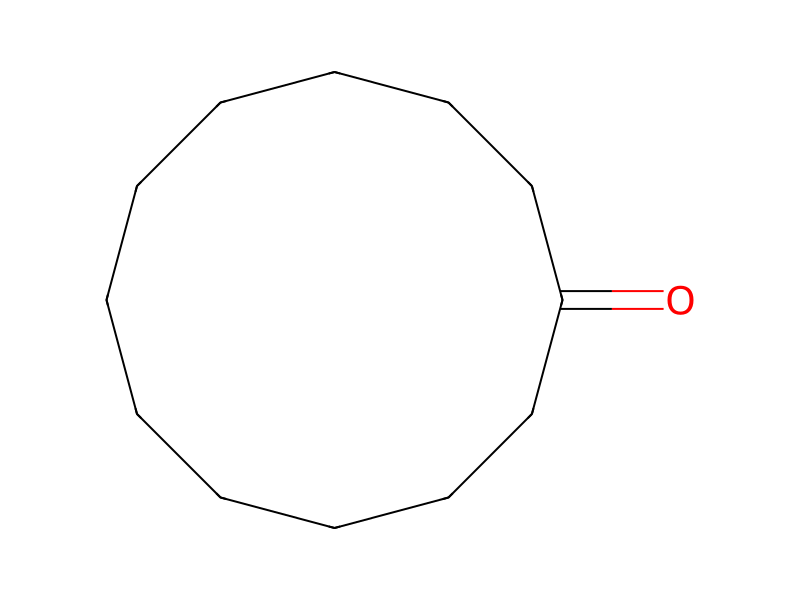
13-Oxabicyclo[10.1.0]tridecane → Cyclododecanone
Reaction equation

[O:1]1[CH:3]2[CH2:4][CH2:5][CH2:6][CH2:7][CH2:8][CH2:9][CH2:10][CH2:11][CH2:12][CH2:13][CH:2]12.[Br-].[Li+]>>[C:2]1(=[O:1])[CH2:13][CH2:12][CH2:11][CH2:10][CH2:9][CH2:8][CH2:7][CH2:6][CH2:5][CH2:4][CH2:3]1Participants

Procedure
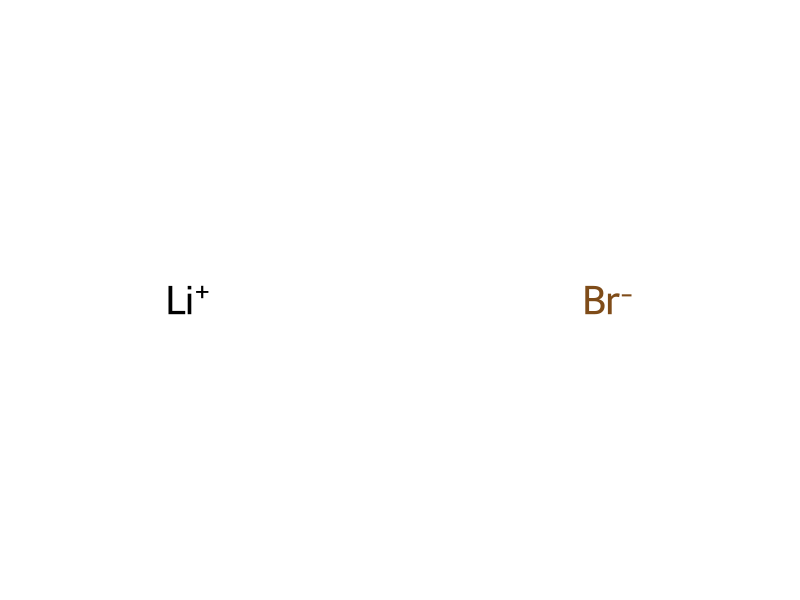
Further, Zh. Org. Khim (1990), 26(7), 1497-1500, discloses that when an isomerization reaction of an epoxycyclododecane was carried out in the presence of 2.3 molar % of a catalyst consisting of LiBr (lithium bromide) at a reaction temperature of 150° C. for a reaction time of 10 hours, the target cyclododecanone was obtained at a yield of 96.6%, and when the reaction of the epoxycyclododecane was effected in the presence of 1.5 molar % of LiI (lithium iodide) at 150° C. for 5 hours, the target cyclododecanone was obtained at a yield of 91.2%. In the case of this report, however, it is assumed that to make the conversion of the epoxycyclododecane close to 100%, a very long reaction time is necessary. Also, the reaction of the report was effected in a batch-type reaction system, and thus no continuous method for the reaction is disclosed in the report.
Sources & evidence
- ORD record
- ord-526640a930f5437fa7a59f4238221bfc
- Source dataset
- uspto-grants-2002_07
- Patent number
- US06417404B1
Reaction notes
Loading…