Phosphoric Acid → 50809-53-5
Reaction equation

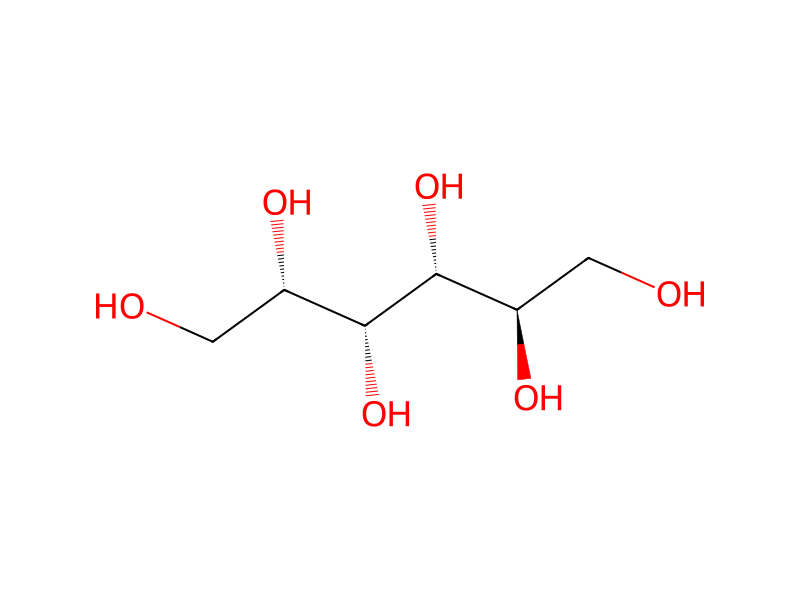
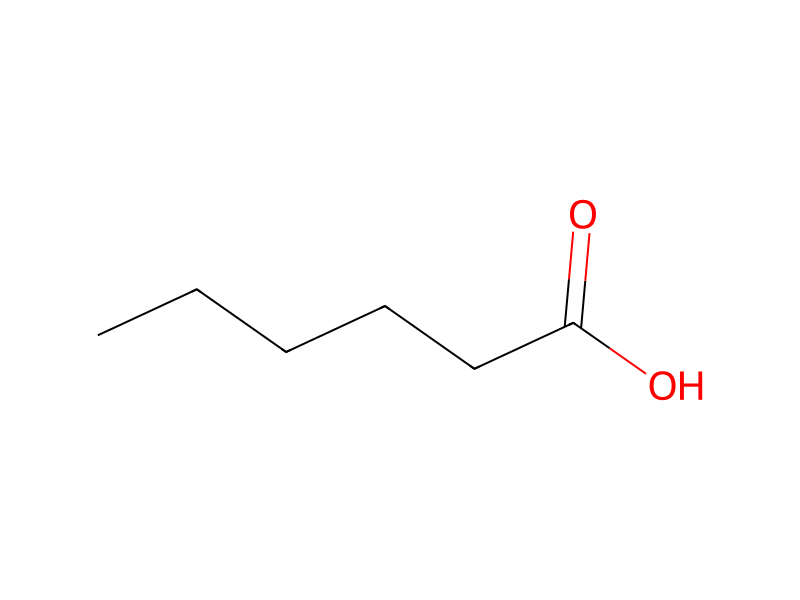
[C:1]([OH:8])(=[O:7])[CH2:2][CH2:3][CH2:4][CH2:5][CH3:6].[OH:9][CH2:10][C@@H:11]([C@H:13]([C@@H:15]([C@@H:17]([CH2:19][OH:20])[OH:18])[OH:16])[OH:14])[OH:12].P(=O)(O)(O)O.[OH-].[Ca+2].[OH-]>>[C:1]([OH:8])(=[O:7])[CH2:2][CH2:3][CH2:4][CH2:5][CH3:6].[OH:20][CH2:19][C@@H:17]([C@H:15]([C@@H:13]([C@@H:11]([CH2:10][OH:9])[OH:12])[OH:14])[OH:16])[OH:18]Participants



Procedure
Sorbitol caproate was prepared by adding 348.48 grams of caproic acid and 546.51 grams of sorbitol to a 2-liter round bottom flask with a mechanical stirrer, heating mantle and temperature controller. Phosphoric acid was used as the catalyst and 39.12 grams of 75% phosphoric acid was added to the reaction. The temperature was set for 150° C. and the pressure was atmospheric pressure. The total reaction time was 24 hours. After 24 hours the phosphoric acid was neutralized with 32.90 grams of calcium hydroxide. The solution was filtered to remove the calcium phosphate precipitate. The final product was analyzed and the free acid remaining in the product was 3.97%, the density was 1.8 g/cc and the ash value was 1.42%. The degree of reaction completion was thus 89.3%.
Workup
- temperatureheating mantle and temperature controller
- additionwas added to the reaction
- customwas set for 150° C.
- filtrationThe solution was filtered
- customto remove the calcium phosphate precipitate
- customThe degree of reaction completion
Sources & evidence
- ORD record
- ord-de092863617548929b2da054ebbc9f34
- Source dataset
- uspto-grants-2002_07
- Patent number
- US06419941B1
Reaction notes
Loading…