Dibromomethane → tert-Butyl 4-(1H-pyrazolo[3,4-d]pyrimidin-4-yl)piperazine-1-carboxylate
Reaction equation

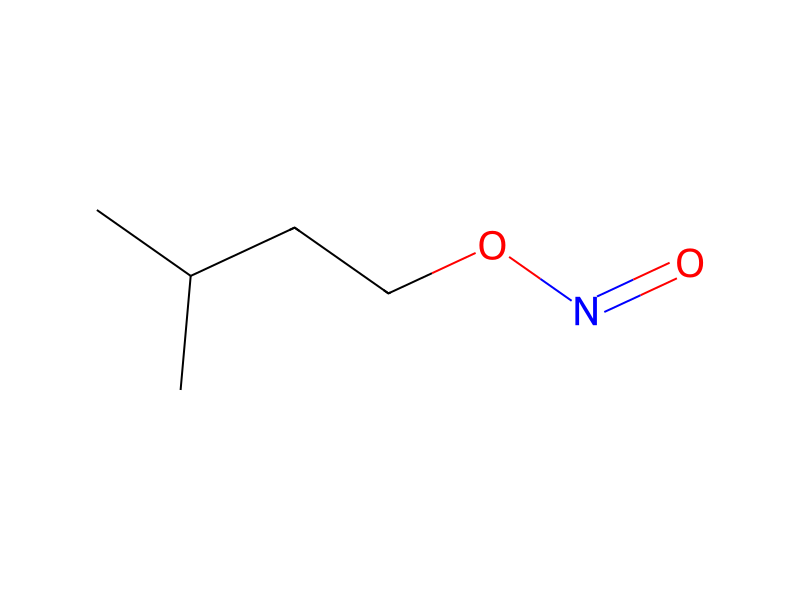
BrCBr.[NH2:4][C:5]1[N:10]=[CH:9][N:8]=[C:7]2[NH:11][N:12]=[CH:13][C:6]=12.N(OCCC(C)C)=O.C(N(CC)CC)C.[C:29]([O:33][C:34]([N:36]1[CH2:41][CH2:40]N[CH2:38][CH2:37]1)=[O:35])([CH3:32])([CH3:31])[CH3:30]>>[C:29]([O:33][C:34]([N:36]1[CH2:41][CH2:40][N:4]([C:5]2[N:10]=[CH:9][N:8]=[C:7]3[NH:11][N:12]=[CH:13][C:6]=23)[CH2:38][CH2:37]1)=[O:35])([CH3:32])([CH3:31])[CH3:30]Participants





Procedure
A dibromomethane suspension (5 mL) of commercially available 4-aminopyrazolo[3,4-d]pyrimidine (420.8 mg, 3.11 mmol) was heated to 80° C., and isoamyl nitrite (0.43 mL, 3.20 mmol) was added thereto, followed by stirring at the same temperature for 3 hours. Isoamyl nitrite (0.43 mL, 3.20 mmol) was further added thereto, followed by heating under reflux for 3.5 hours, and then the insoluble matter was removed by filtration. The filtrate was concentrated, the resulting residue was dissolved in dimethylformamide (5 mL), and then triethylamine (2.00 mL, 14.3 mmol) and N-tert-butoxycarbonylpiperazine (1.00 g, 5.37 mmol) were added thereto, followed by stirring at room temperature overnight. After the reaction solution was concentrated, the resulting residue was purified by silica gel column chromatography to give the target compound (20.4 mg, 0.07 mmol).
Workup
- temperatureby heating
- temperatureunder reflux for 3.5 hours
- customthe insoluble matter was removed by filtration
- concentrationThe filtrate was concentrated
- dissolutionthe resulting residue was dissolved in dimethylformamide (5 mL)
- stirringby stirring at room temperature overnight
- concentrationAfter the reaction solution was concentrated
- customthe resulting residue was purified by silica gel column chromatography
Sources & evidence
- ORD record
- ord-2044c45718d84924bf6197c8842e2b50
- Source dataset
- uspto-grants-2002_07
- Patent number
- US06423716B1
Reaction notes
Loading…