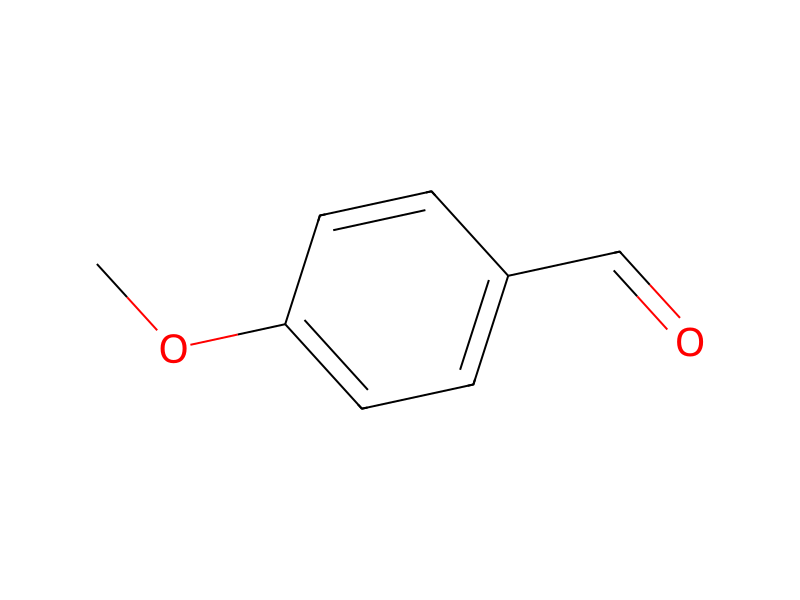
4-Methoxybenzaldehyde → HCID 14100161, compound
Reaction equation

[C:1]1([C:7]2[C:12]([C:13]3[CH:18]=[CH:17][CH:16]=[CH:15][CH:14]=3)=[N:11][CH2:10][CH2:9][N:8]=2)[CH:6]=[CH:5][CH:4]=[CH:3][CH:2]=1.[CH:19](=O)[C:20]1[CH:25]=[CH:24][C:23]([O:26][CH3:27])=[CH:22][CH:21]=1>CO.O>[C:1]1([C:7]2[C:12]([C:13]3[CH:14]=[CH:15][CH:16]=[CH:17][CH:18]=3)=[N:11][C:10]([CH2:19][C:20]3[CH:25]=[CH:24][C:23]([O:26][CH3:27])=[CH:22][CH:21]=3)=[CH:9][N:8]=2)[CH:6]=[CH:5][CH:4]=[CH:3][CH:2]=1Participants
4
Reactant 2

Product 1

Reagents, catalysts & solvents 1

Procedure
The same procedures as in Example 3 were repeated using 2,3-diphenyl-5,6-dihydropyrazine and p-anisaldehyde. 2,3-Diphenyl-5-(p-methoxybenzyl)pyrazine was obtained as colorless prisms, m.p. 102°-103° C. (recrystallized from methanol-water). Physical properties of the product support a chemical structure of the below formula (VIII).
Sources & evidence
- ORD record
- ord-a185ba0495ac4eecabdf1948131ebd40
- Source dataset
- uspto-grants-1988_11
- Patent number
- US04788197
Reaction notes
Loading…