Lithium Hydroxide → HCID 68447708, compound
Reaction equation

[F:1][C:2]1[C:3]([C:14]2([C:17]([OH:19])=[O:18])[CH2:16][O:15]2)=[C:4]2[C:9](=[CH:10][CH:11]=1)[N:8]=[CH:7][C:6]([O:12]C)=[N:5]2.[OH-].[Li+]>O1CCOCC1.O>[F:1][C:2]1[CH:11]=[CH:10][C:9]2[N:8]=[CH:7][C:6](=[O:12])[N:5]3[CH2:16][C:14]([OH:15])([C:17]([OH:19])=[O:18])[C:3]=1[C:4]=23Participants
5
Reactant 2

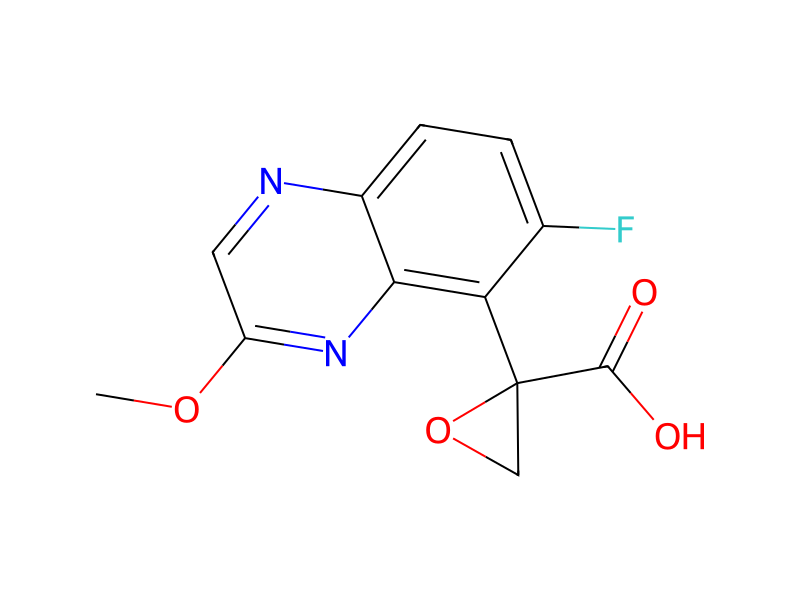
Product 1

Reagents, catalysts & solvents 2


Conditions
- Temperature
- 80 °C
Procedure
A solution of 2-[6-fluoro-3-(methyloxy)-5-quinoxalinyl]-2-oxiranecarboxylic acid (3.22 g, 0.012 mol) in 1,4-dioxane (210 mL) and water (90 mL) was treated with lithium hydroxide (584 mg, 0.024 mol) dropwise at RT. The reaction mixture was heated at 80° C. for 35 hours then cooled, quenched to pH 7 with a 2M solution of hydrochloric acid and then the solvent was evaporated. The residue was placed directly onto a 100 g silica gel column and chromatographed, eluting with a 0-50% methanol in dichloromethane gradient to afford the product as a yellow solid (7.07 g of a 3:1 mixture of product/starting material).
Workup
- temperaturethen cooled
- customquenched to pH 7 with a 2M solution of hydrochloric acid
- customthe solvent was evaporated
- customchromatographed
- washeluting with a 0-50% methanol in dichloromethane gradient
Sources & evidence
- ORD record
- ord-2873800db8a744139a68878033e250c0
- Source dataset
- uspto-grants-2010_05
- Patent number
- US07709483B2
Reaction notes
Loading…