Triethylamine → HCID 13080163, compound
Reaction equation

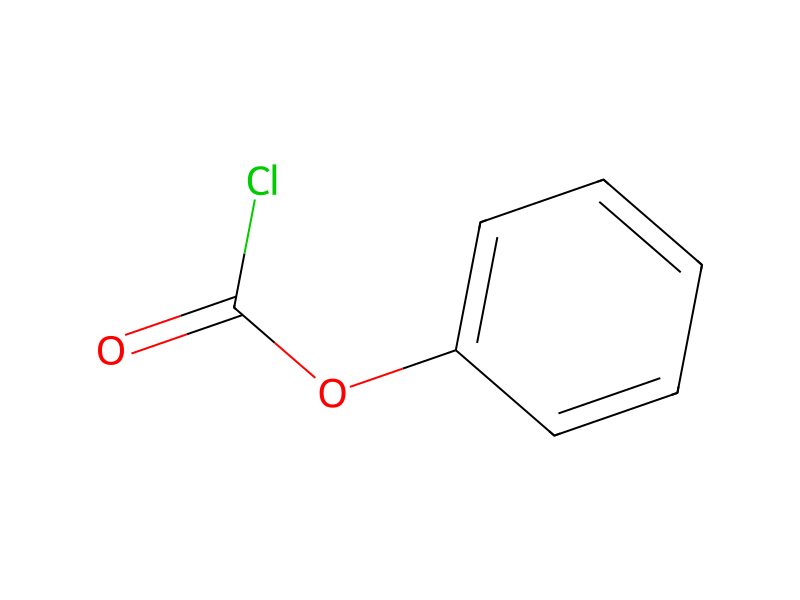
[OH:1][C:2]1[CH:7]=[C:6]([CH3:8])[N:5]=[C:4]([C:9]([Cl:12])([Cl:11])[Cl:10])[N:3]=1.C(N(CC)CC)C.Cl[C:21]([O:23][C:24]1[CH:29]=[CH:28][CH:27]=[CH:26][CH:25]=1)=[O:22]>CCOCC>[CH3:8][C:6]1[N:5]=[C:4]([C:9]([Cl:12])([Cl:10])[Cl:11])[N:3]=[C:2]([O:1][C:21]([O:23][C:24]2[CH:29]=[CH:28][CH:27]=[CH:26][CH:25]=2)=[O:22])[CH:7]=1Participants
5
Reactant 3


Product 1

Reagents, catalysts & solvents 1

Procedure
To 5.6 g (0.02 mole) 4-hydroxy-6-methyl-2-trichloromethylpyrimidine, 2.0 g (0.02 moles) triethylamine, and 100 ml ether was added 3.2 g (0.07 mole) phenyl chloroformate. The solution refluxed on addition and a precipitate formed. This was stirred 0.5 hour, filtered, and the filtrate rotary evaporated to give 6.6 g (76% yield) thick oily residue. Extraction with ligroin gave, on cooling of the extract, 3.7 g pure product as a viscous oil. The structure was confirmed via infrared and elemental analysis.
Workup
- temperatureThe solution refluxed on addition
- customa precipitate formed
- filtrationfiltered
- customthe filtrate rotary evaporated
Sources & evidence
- ORD record
- ord-a816d89191784e31b884dd383ca127b3
- Source dataset
- uspto-grants-1982_10
- Patent number
- US04353908
Reaction notes
Loading…