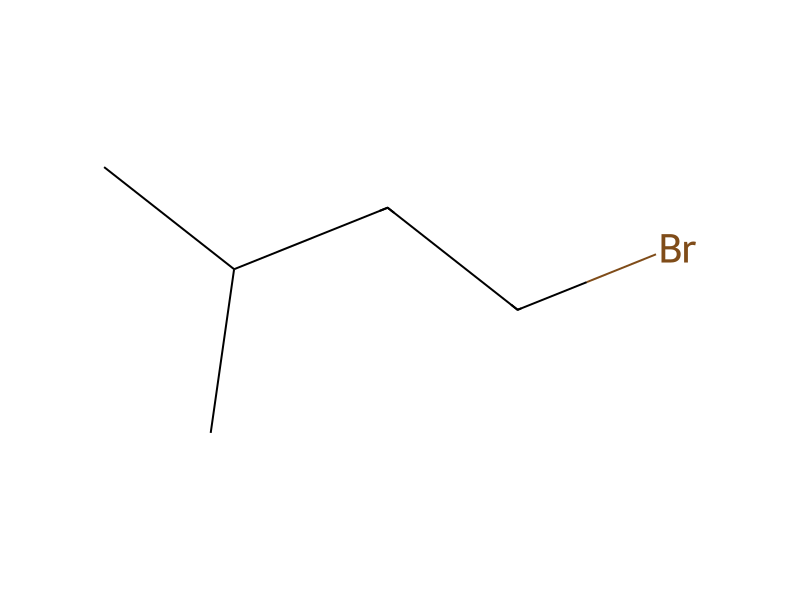
1-Bromo-3-methylbutane → 8-chloro-3-(3-methylbutyl)-7-(2-propen-1-yl)-3,7-dihydro-1H-purine-2,6-dione
Reaction equation

[Cl:1][C:2]1[N:10]([CH2:11][CH:12]=[CH2:13])[C:9]2[C:8](=[O:14])[NH:7][C:6](=[O:15])[NH:5][C:4]=2[N:3]=1.C(=O)([O-])[O-].[Na+].[Na+].Br[CH2:23][CH2:24][CH:25]([CH3:27])[CH3:26]>CN(C=O)C>[Cl:1][C:2]1[N:10]([CH2:11][CH:12]=[CH2:13])[C:9]2[C:8](=[O:14])[NH:7][C:6](=[O:15])[N:5]([CH2:23][CH2:24][CH:25]([CH3:27])[CH3:26])[C:4]=2[N:3]=1Participants
5




Conditions
- Temperature
- 50 °C
Procedure
A solution of 8-chloro-7-(2-propen-1-yl)-3,7-dihydro-1H-purine-2,6-dione (1.5 g, 6.6 mmol) in DMF (40 ml) was treated with sodium carbonate (0.9 g, 8.5 mmol) and 1-bromo-3-methylbutane (1.04 g, 6.9 mmol). The stirred mixture was heated at 50° C. for 18 hours then cooled and evaporated to dryness. The residue was treated with water (60 ml) and extracted with ethyl acetate (3×80 ml). The organic fractions were combined, dried over magnesium sulfate, filtered and evaporated. The residue was triturated with a mixture of diethyl ether and cyclohexane to reveal the product as a white solid which was filtered off and dried. This gave the title compound as a white solid m/z 297[MH+].
Workup
- temperaturethen cooled
- customevaporated to dryness
- additionThe residue was treated with water (60 ml)
- extractionextracted with ethyl acetate (3×80 ml)
- dry with materialdried over magnesium sulfate
- filtrationfiltered
- customevaporated
- customThe residue was triturated with a mixture of diethyl ether and cyclohexane
- filtrationwas filtered off
- customdried
Sources & evidence
- ORD record
- ord-e9e2a74655f94cd5ba1e7fe606bbf57d
- Source dataset
- uspto-grants-2010_05
- Patent number
- US07713982B2
Reaction notes
Loading…