2-Morpholino-5-nitropyridine → 6-(Morpholino)pyridin-3-amine
Reaction equation

[N+:1]([C:4]1[CH:5]=[CH:6][C:7]([N:10]2[CH2:15][CH2:14][O:13][CH2:12][CH2:11]2)=[N:8][CH:9]=1)([O-])=O.[H][H]>C(OCC)(=O)C.[Pd]>[N:10]1([C:7]2[N:8]=[CH:9][C:4]([NH2:1])=[CH:5][CH:6]=2)[CH2:15][CH2:14][O:13][CH2:12][CH2:11]1Participants
5
Reactant 2


Product 1
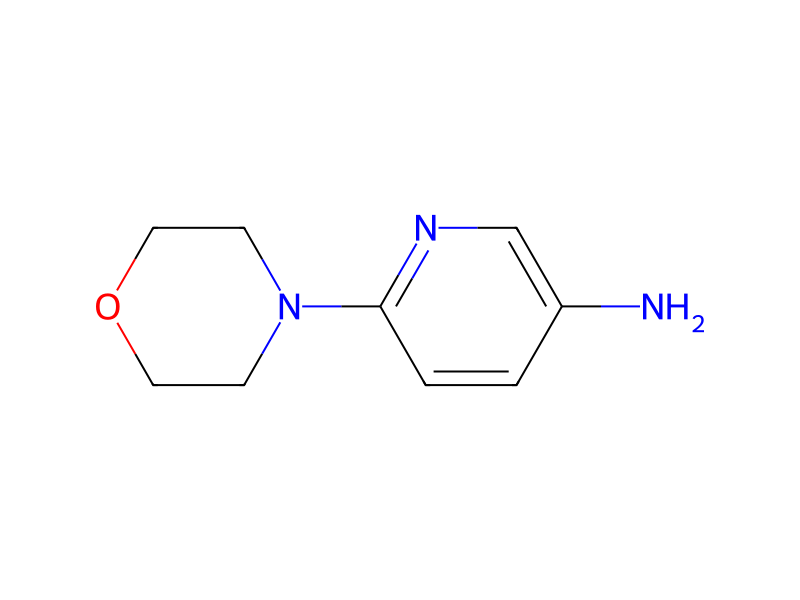
Reagents, catalysts & solvents 2


Procedure
The solution of 4-(5-nitro-pyridin-2-yl)-morpholine (1.5 g, 7.18 mmol) in ethyl acetate (20 mL) in the presence of 10% palladium on carbon (0.75 g) was shaken under the hydrogen with a pressure of 50 psi at room temperature for 3 hr. After the reaction, the reaction mixture was filtered through a plug of celite and the filtration pad was washed with ethyl acetate. The organic layer was collected, concentrated, and dried to give 6-morpholin-4-yl-pyridin-3-ylamine (1.11 g, crude) as a light red solid, which was directly used in the next step reaction without further purification. LCMS calcd for C9H14N3O (m/e) 179, obsd 180 (M+H).
Workup
- customAfter the reaction
- filtrationthe reaction mixture was filtered through a plug of celite
- washthe filtration pad was washed with ethyl acetate
- customThe organic layer was collected
- concentrationconcentrated
- customdried
Sources & evidence
- ORD record
- ord-cda45f171d5f4bf799a42e4490c222eb
- Source dataset
- uspto-grants-2010_05
- Patent number
- US07714126B2
Reaction notes
Loading…