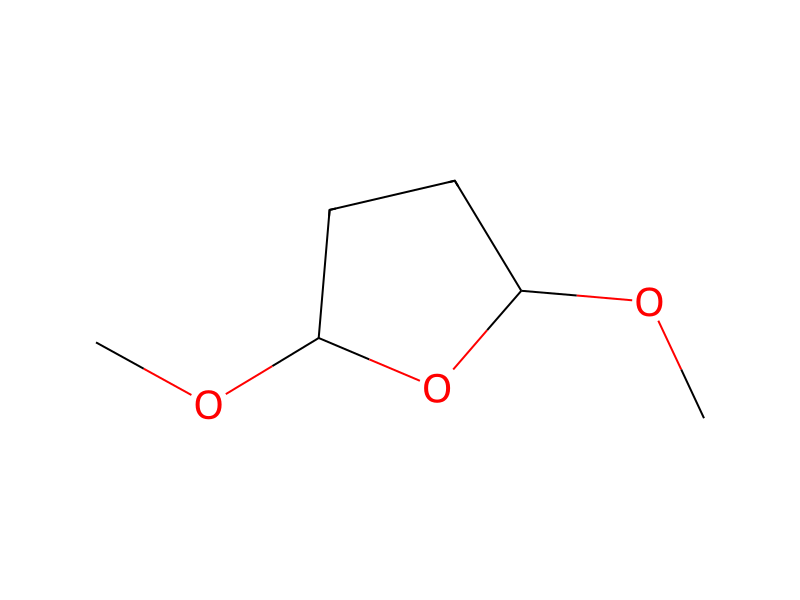
2,5-Dimethoxytetrahydrofuran → 6-pyrrolidin-1-yl-4H-isoquinoline-1,3-dione
Reaction equation

[NH2:1][C:2]1[CH:3]=[C:4]2[C:9](=[CH:10][CH:11]=1)[C:8](=[O:12])[NH:7][C:6](=[O:13])[CH2:5]2.CO[CH:16]1[CH2:20][CH2:19][CH:18](OC)O1.[BH4-].[Na+]>FC(F)(F)C(O)=O>[N:1]1([C:2]2[CH:3]=[C:4]3[C:9](=[CH:10][CH:11]=2)[C:8](=[O:12])[NH:7][C:6](=[O:13])[CH2:5]3)[CH2:16][CH2:20][CH2:19][CH2:18]1Participants
5



Procedure
To a solution of 6-Amino-4H-isoquinoline-1,3-dione (17.6 mg, 0.1 mmol) in trifluoroacetic acid (250 μL) is added 2,5-dimethoxytetrahydrofuran (15 μL, 0.11 mmol). The reaction mixture is shaken for 5 minutes at ambient temperature, followed by addition of sodium borohydride (9 mg, 0.22 mmol). After shaking at ambient temperature for 15 minutes, gas evolution had ceased and the reaction mixture is quenched with saturated bicarbonate solution. Upon quenching, a precipitate formed. The precipitate is filtered off, rinsed with water, and dried to yield 19.5 mg of 6-Pyrrolidin-1-yl-4H-isoquinoline-1,3-dione.
Workup
- stirringAfter shaking at ambient temperature for 15 minutes
- customthe reaction mixture is quenched with saturated bicarbonate solution
- customUpon quenching
- customa precipitate formed
- filtrationThe precipitate is filtered off
- washrinsed with water
- customdried
Sources & evidence
- ORD record
- ord-48c77a1e46f7483d9215ba1155c2bd2e
- Source dataset
- uspto-grants-2010_05
- Patent number
- US07713994B2
Reaction notes
Loading…